115195
论文已发表
注册即可获取德孚的最新动态
IF 收录期刊
- 3.6 Breast Cancer (Dove Med Press)
- 4.3 Clin Epidemiol
- 2.6 Cancer Manag Res
- 3.2 Infect Drug Resist
- 4.1 Clin Interv Aging
- 6.1 Drug Des Dev Ther
- 4.1 Int J Chronic Obstr
- 8.7 Int J Nanomed
- 2.5 Int J Women's Health
- 3.2 Neuropsych Dis Treat
- 2.4 OncoTargets Ther
- 2.6 Patient Prefer Adher
- 2.6 Ther Clin Risk Manag
- 3.1 J Pain Res
- 3.5 Diabet Metab Synd Ob
- 4.5 Psychol Res Behav Ma
- 3.4 Nat Sci Sleep
- 2.4 Pharmgenomics Pers Med
- 2.6 Risk Manag Healthc Policy
- 4.6 J Inflamm Res
- 2.3 Int J Gen Med
- 3.9 J Hepatocell Carcinoma
- 3.3 J Asthma Allergy
- 2.5 Clin Cosmet Investig Dermatol
- 3.0 J Multidiscip Healthc

Watson(“沃森”)肿瘤解决方案系统与医疗团队之间关于转移性非小细胞肺癌治疗建议的一致性
Authors You HS, Gao CX, Wang HB, Luo SS, Chen SY, Dong YL, Lyu J, Tian T
Received 6 January 2020
Accepted for publication 26 February 2020
Published 16 March 2020 Volume 2020:12 Pages 1947—1958
DOI https://doi.org/10.2147/CMAR.S244932
Checked for plagiarism Yes
Review by Single-blind
Peer reviewer comments 2
Editor who approved publication: Dr Chien-Feng Li
Objective: The disease complexity of metastatic non-small-cell lung cancer (mNSCLC) makes it difficult for physicians to make clinical decisions efficiently and accurately. The Watson for Oncology (WFO) system of artificial intelligence might help physicians by providing fast and precise treatment regimens. This study measured the concordance of the medical treatment regimens of the WFO system and actual clinical regimens, with the aim of determining the suitability of WFO recommendations for Chinese patients with mNSCLC.
Methods: Retrospective data of mNSCLC patients were input to the WFO, which generated a treatment regimen (WFO regimen). The actual regimen was made by physicians in a medical team for patients (medical-team regimen). The factors influencing the consistency of the two treatment options were analyzed by univariate and multivariate analyses.
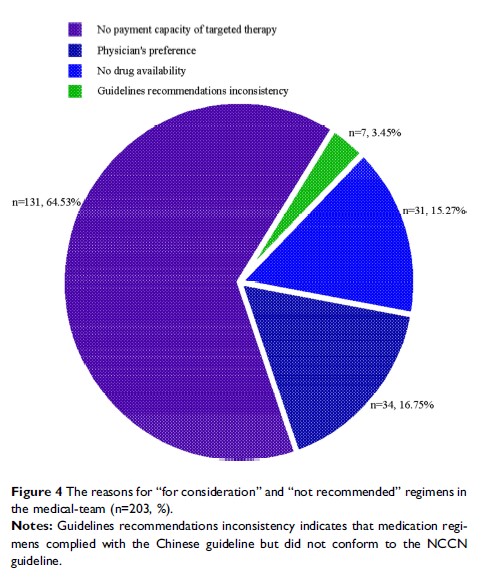
Results: The concordance rate was 85.16% between the WFO and medical-team regimens for mNSCLC patients. Logistic regression showed that the concordance differed significantly for various pathological types and gene mutations in two treatment regimens. Patients with adenocarcinoma had a lower rate of “recommended” regimen than those with squamous cell carcinoma. There was a statistically significant difference in EGFR-mutant patients for “not recommended” regimens with inconsistency rate of 18.75%. In conclusion, the WFO regimen has 85.16% consistency rate with medical-team regimen in our treatment center. The different pathological type and different gene mutation markedly influenced the agreement rate of the two treatment regimens.
Conclusion: WFO recommendations have high applicability to mNSCLC patients in our hospital. This study demonstrates that the valuable WFO system may assist the doctors better to determine the accurate and effective treatment regimens for mNSCLC patients in the Chinese medical setting.
Keywords: metastatic non-small-cell lung cancer, Watson for Oncology, concordance, artificial intelligence, treatment recommendations