115195
论文已发表
注册即可获取德孚的最新动态
IF 收录期刊
- 3.6 Breast Cancer (Dove Med Press)
- 4.3 Clin Epidemiol
- 2.6 Cancer Manag Res
- 3.2 Infect Drug Resist
- 4.1 Clin Interv Aging
- 6.1 Drug Des Dev Ther
- 4.1 Int J Chronic Obstr
- 8.7 Int J Nanomed
- 2.5 Int J Women's Health
- 3.2 Neuropsych Dis Treat
- 2.4 OncoTargets Ther
- 2.6 Patient Prefer Adher
- 2.6 Ther Clin Risk Manag
- 3.1 J Pain Res
- 3.5 Diabet Metab Synd Ob
- 4.5 Psychol Res Behav Ma
- 3.4 Nat Sci Sleep
- 2.4 Pharmgenomics Pers Med
- 2.6 Risk Manag Healthc Policy
- 4.6 J Inflamm Res
- 2.3 Int J Gen Med
- 3.9 J Hepatocell Carcinoma
- 3.3 J Asthma Allergy
- 2.5 Clin Cosmet Investig Dermatol
- 3.0 J Multidiscip Healthc

影响癌症相关疲劳患者耳穴按摩治疗依从性的因素
Authors Lin L, Jing X, Zhang Y, Qian H, Xu J, Tian L
Received 6 May 2020
Accepted for publication 9 July 2020
Published 27 July 2020 Volume 2020:14 Pages 1275—1281
DOI https://doi.org/10.2147/PPA.S261466
Checked for plagiarism Yes
Review by Single anonymous peer review
Peer reviewer comments 2
Editor who approved publication: Dr Naifeng Liu
Background: Patient compliance can influence the effect of auricular acupressure used to manage cancer-related fatigue (CRF).
Objective: To explore the barriers and facilitators affecting patients’ compliance with treatment.
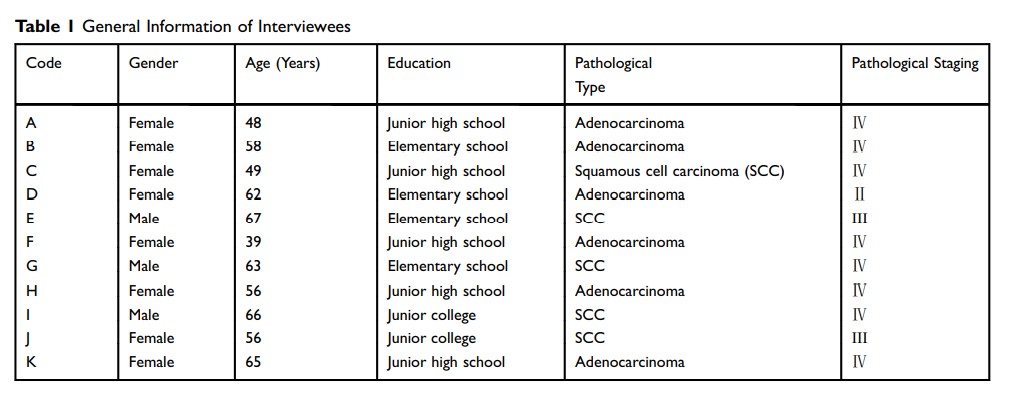
Methods: The maximum difference sampling method was used to conduct qualitative interviews with 11 CRF patients undergoing auricular acupressure therapy. The interview data were analyzed by Colaizzi’s seven-step analysis.
Results: Convenience and acceptability of the therapy, preliminary effects of its implementation, fully believing in the benefits of auricular acupressure and being habituated to the therapy, help and reminder from family members are the facilitating factors to improve patient compliance with auricular acupressure therapy, while the hindering factors include having doubts about the effect of acupressure resulting in interruption, having limited access to medical resources, deterioration of the condition resulting in self-abandonment, and weak family support.
Conclusion: In clinical nursing practice, attention should be paid to the analysis of the facilitating and hindering factors during the implementation of auricular acupressure therapy as well as the development of targeted intervention measures to improve patient compliance so as to enhance the effectiveness of auricular acupressure.
Keywords: auricular acupressure, compliance, cancer-related fatigue, influencing factors