117333
论文已发表
注册即可获取德孚的最新动态
IF 收录期刊
- 3.6 Breast Cancer (Dove Med Press)
- 4.3 Clin Epidemiol
- 2.6 Cancer Manag Res
- 3.2 Infect Drug Resist
- 4.1 Clin Interv Aging
- 6.1 Drug Des Dev Ther
- 4.1 Int J Chronic Obstr
- 8.7 Int J Nanomed
- 2.5 Int J Women's Health
- 3.2 Neuropsych Dis Treat
- 2.4 OncoTargets Ther
- 2.6 Patient Prefer Adher
- 2.6 Ther Clin Risk Manag
- 3.1 J Pain Res
- 3.5 Diabet Metab Synd Ob
- 4.5 Psychol Res Behav Ma
- 3.4 Nat Sci Sleep
- 2.4 Pharmgenomics Pers Med
- 2.6 Risk Manag Healthc Policy
- 4.6 J Inflamm Res
- 2.3 Int J Gen Med
- 3.9 J Hepatocell Carcinoma
- 3.3 J Asthma Allergy
- 2.5 Clin Cosmet Investig Dermatol
- 3.0 J Multidiscip Healthc

已发表论文
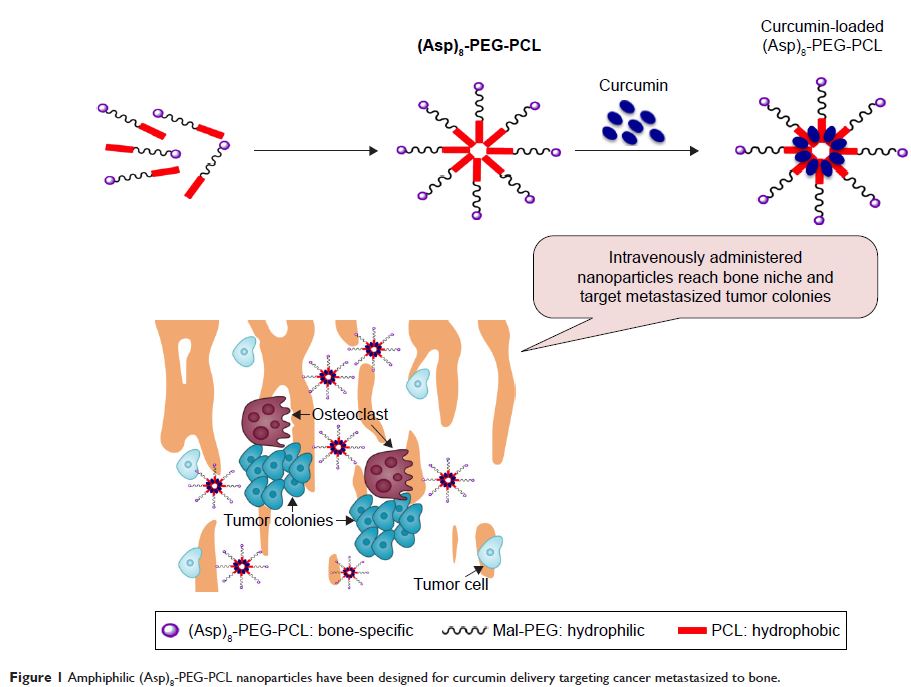
将聚天冬氨酸肽 - 聚 (乙二醇) - 聚 (ε-己内酯) 纳米粒子作为疏水药物 (靶向已转移至骨的癌症) 载体的设计
Authors Liu JS, Zeng Y, Shi S, Xu L, Zhang HL, Pathak JL, Pan Y
Received 3 February 2017
Accepted for publication 3 April 2017
Published 8 May 2017 Volume 2017:12 Pages 3561—3575
DOI https://doi.org/10.2147/IJN.S133787
Checked for plagiarism Yes
Review by Single-blind
Peer reviewers approved by Dr Akshita Wason
Peer reviewer comments 2
Editor who approved publication: Dr Linlin Sun
Abstract: Treatment of cancer
metastasized to bone is still a challenge due to hydrophobicity, instability,
and lack of target specificity of anticancer drugs. Poly (ethylene glycol)-poly
(ε-caprolactone) polymer (PEG-PCL) is an effective, biodegradable, and
biocompatible hydrophobic drug carrier, but lacks bone specificity.
Polyaspartic acid with eight peptide sequences, that is, (Asp)8, has a strong
affinity to bone surface. The aim of this study was to synthesize (Asp)8-PEG-PCL
nanoparticles as a bone-specific carrier of hydrophobic drugs to treat cancer
metastasized to bone. 1H nuclear magnetic resonance, Fourier transform infrared
spectroscopy, and transmission electron microscopy data showed that (Asp)8-PEG-PCL
nanoparticles (size 100 nm) were synthesized successfully. (Asp)8-PEG-PCL
nanoparticles did not promote erythrocyte aggregation. Fluorescence microscopy
showed clear uptake of Nile red-loaded (Asp)8-PEG-PCL
nanoparticles by cancer cells. (Asp)8-PEG-PCL
nanoparticles did not show cytotoxic effect on MG63 and human umbilical vein
endothelial cells at the concentration of 10–800 µg/mL. (Asp)8-PEG-PCL
nanoparticles bound with hydroxyapatite 2-fold more than PEG-PCL. Intravenously
injected (Asp)8-PEG-PCL nanoparticles accumulated 2.7-fold more
on mice tibial bone, in comparison to PEG-PCL. Curcumin is a hydrophobic
anticancer drug with bone anabolic properties. Curcumin was loaded in the (Asp)8-PEG-PCL. (Asp)8-PEG-PCL showed
11.07% loading capacity and 95.91% encapsulation efficiency of curcumin. The
curcumin-loaded (Asp)8-PEG-PCL nanoparticles gave sustained release of
curcumin in high dose for >8 days. The curcumin-loaded (Asp)8-PEG-PCL
nanoparticles showed strong antitumorigenic effect on MG63, MCF7, and HeLa
cancer cells. In conclusion, (Asp)8-PEG-PCL
nanoparticles were biocompatible, permeable in cells, a potent carrier, and an
efficient releaser of hydrophobic anticancer drug and were bone specific. The
curcumin-loaded (Asp)8-PEG-PCL nanoparticles showed strong
antitumorigenic ability in vitro. Therefore, (Asp)8-PEG-PCL
nanoparticles could be a potent carrier of hydrophobic anticancer drugs to
treat the cancer metastasized to bone.
Keywords: bone-targeting nanoparticles, polyaspartic acid peptides, PEG-PCL, cancer metastasized to bone, hydrophobic anticancer drug, curcumin
Keywords: bone-targeting nanoparticles, polyaspartic acid peptides, PEG-PCL, cancer metastasized to bone, hydrophobic anticancer drug, curcumin