115195
论文已发表
注册即可获取德孚的最新动态
IF 收录期刊
- 3.6 Breast Cancer (Dove Med Press)
- 4.3 Clin Epidemiol
- 2.6 Cancer Manag Res
- 3.2 Infect Drug Resist
- 4.1 Clin Interv Aging
- 6.1 Drug Des Dev Ther
- 4.1 Int J Chronic Obstr
- 8.7 Int J Nanomed
- 2.5 Int J Women's Health
- 3.2 Neuropsych Dis Treat
- 2.4 OncoTargets Ther
- 2.6 Patient Prefer Adher
- 2.6 Ther Clin Risk Manag
- 3.1 J Pain Res
- 3.5 Diabet Metab Synd Ob
- 4.5 Psychol Res Behav Ma
- 3.4 Nat Sci Sleep
- 2.4 Pharmgenomics Pers Med
- 2.6 Risk Manag Healthc Policy
- 4.6 J Inflamm Res
- 2.3 Int J Gen Med
- 3.9 J Hepatocell Carcinoma
- 3.3 J Asthma Allergy
- 2.5 Clin Cosmet Investig Dermatol
- 3.0 J Multidiscip Healthc

胰岛素受体底物 1 基因上游区的变异与汉族人群的重度抑郁症相关
Authors Wang F, Yu S, Zhou R, Mao R, Zhao G, Guo X, Xu Q, Chen J, Zhang C, Fang Y
Received 12 July 2019
Accepted for publication 21 January 2020
Published 20 February 2020 Volume 2020:16 Pages 501—507
DOI https://doi.org/10.2147/NDT.S222906
Checked for plagiarism Yes
Review by Single-blind
Peer reviewer comments 3
Editor who approved publication: Professor Yuping Ning
Introduction: Major depressive disorder (MDD) is one of the most prevalent and disabling mental disorders, although its underlying genetic mechanism remains unknown. Insulin receptor substrate-1 (IRS-1) is one of the critical downstream molecules in the insulin resistance signaling pathway, linking depression and diabetes. Therefore, we hypothesized that IRS-1 would be a susceptible gene for MDD, and we aimed to examine the genetic association between IRS-1 and MDD.
Methods: This case-control study included 583 patients with MDD and 564 controls, and the genotypic and allelic distributions of the IRS-1 gene’s four single nucleotide polymorphisms (SNPs) were detected by TaqMan SNP genotyping technology. Of the 583 patients, 191 underwent a further detailed interview about symptom severity and family history of mental illness. The chi-square or t test was used to analyze the data, and analyses were performed using SPSS19.0 software.
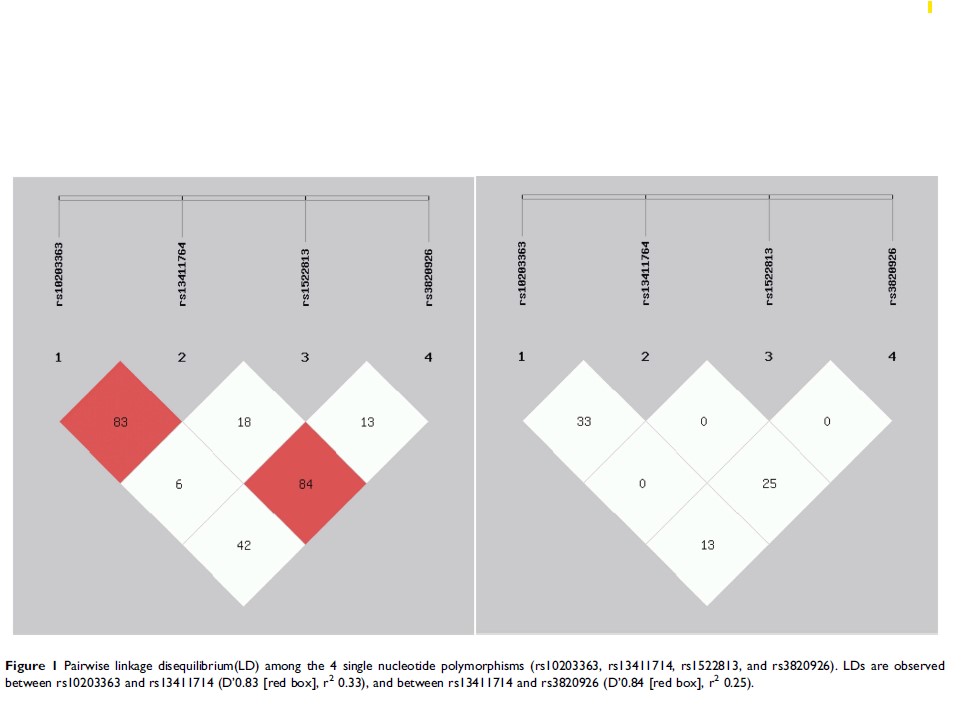
Results: A haplotype in the 5ʹ-upstream region of IRS-1 consisting of rs13411764 and rs3820926 was a risk factor of MDD. Patients with a family history of mental illness were more likely to have a GG genotype in rs13411764 and a G-T haplotype containing rs13411714-rs3820926.
Discussion: The findings imply that the haplotype consisting of rs13411764 and rs3820926 in the upstream of IRS-1 is a risk factor for MDD. This haplotype could affect IRS-1 expression levels, and it is mostly inherited from parents. Thus, the presence of variants in the upstream region of IRS-1 is a risk factor of MDD, and this study could serve as a convincing reference for further studies.
Keywords: major depressive disorder, IRS-1, single nucleotide polymorphisms, haplotype, family history