115195
论文已发表
注册即可获取德孚的最新动态
IF 收录期刊
- 3.6 Breast Cancer (Dove Med Press)
- 4.3 Clin Epidemiol
- 2.6 Cancer Manag Res
- 3.2 Infect Drug Resist
- 4.1 Clin Interv Aging
- 6.1 Drug Des Dev Ther
- 4.1 Int J Chronic Obstr
- 8.7 Int J Nanomed
- 2.5 Int J Women's Health
- 3.2 Neuropsych Dis Treat
- 2.4 OncoTargets Ther
- 2.6 Patient Prefer Adher
- 2.6 Ther Clin Risk Manag
- 3.1 J Pain Res
- 3.5 Diabet Metab Synd Ob
- 4.5 Psychol Res Behav Ma
- 3.4 Nat Sci Sleep
- 2.4 Pharmgenomics Pers Med
- 2.6 Risk Manag Healthc Policy
- 4.6 J Inflamm Res
- 2.3 Int J Gen Med
- 3.9 J Hepatocell Carcinoma
- 3.3 J Asthma Allergy
- 2.5 Clin Cosmet Investig Dermatol
- 3.0 J Multidiscip Healthc

通过氟苯那酸共同给药,增强索拉非尼介孔二氧化硅纳米矩阵在转移性乳腺癌和肝细胞癌中的抗肿瘤活性
Authors Li ZY, Yin YF, Guo Y, Li H, Xu MQ, Liu M, Wang JR, Feng ZH, Duan XC, Zhang S, Zhang SQ, Wang GX, Liao A, Wang SM, Zhang X
Received 28 November 2019
Accepted for publication 21 February 2020
Published 16 March 2020 Volume 2020:15 Pages 1809—1821
DOI https://doi.org/10.2147/IJN.S240436
Checked for plagiarism Yes
Review by Single-blind
Peer reviewer comments 2
Editor who approved publication: Dr Linlin Sun
Introduction: Because tumor-associated inflammation is a hallmark of cancer treatment, in the present study, sorafenib mesoporous silica nanomatrix (MSNM@SFN) co-administrated with flufenamic acid (FFA, a non-steroidal anti–inflammatory drug (NSAID)) was investigated to enhance the anti-tumor activity of MSNM@SFN.
Methods: Metastatic breast tumor 4T1/luc cells and hepatocellular carcinoma HepG2 cells were selected as cell models. The effects of FFA in vitro on cell migration, PGE2 secretion, and AKR1C1 and AKR1C3 levels in 4T1/luc and HepG2 cells were investigated. The in vivo anti-tumor activity of MSNM@SFN co-administrating with FFA (MSNM@SFN+FFA) was evaluated in a 4T1/luc metastatic tumor model, HepG2 tumor-bearing nude mice model, and HepG2 orthotopic tumor-bearing nude mice model, respectively.
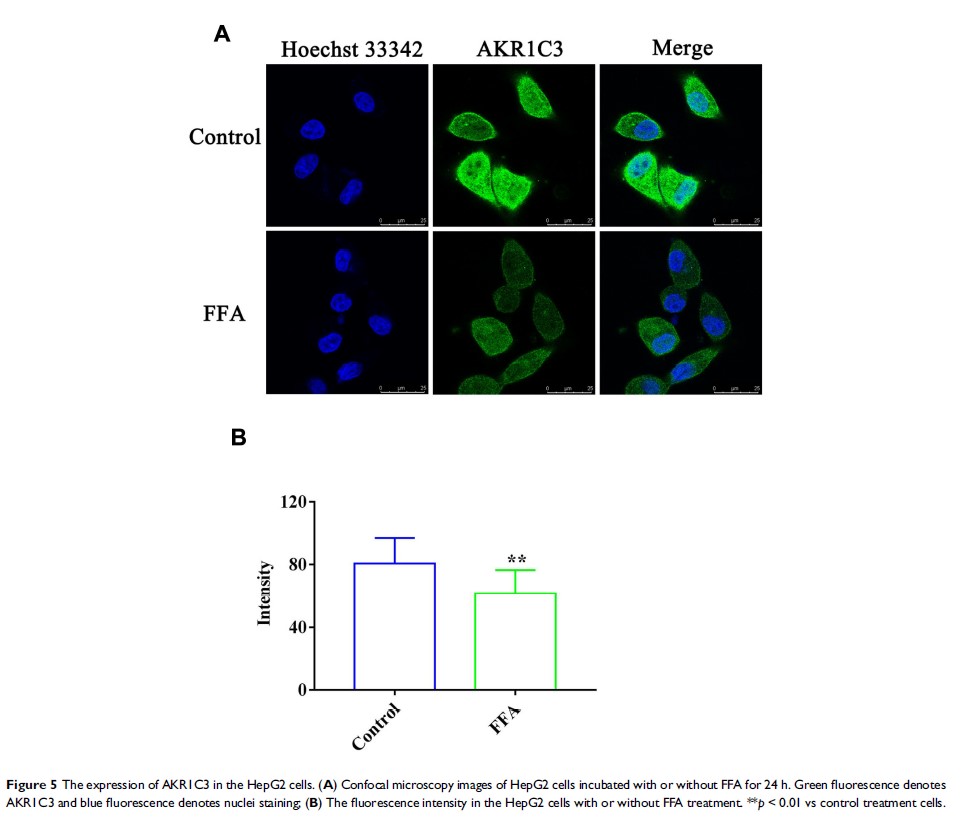
Results: The results indicated that FFA could markedly decrease cell migration, PGE2 secretion, and AKR1C1 and AKR1C3 levels in both 4T1/luc and HepG2 cells. The enhanced anti-tumor activity of MSNM@SFN+FFA compared with that of MSNM@SFN was confirmed in the 4T1/luc metastatic tumor model, HepG2 tumor-bearing nude mice model, and HepG2 orthotopic tumor-bearing nude mice model in vivo, respectively.
Discussion: MSNM@SFN co-administrating with FFA (MSNM@SFN+FFA) developed in this study is an alternative strategy for improving the therapeutic efficacy of MSNM@SFN via co-administration with NSAIDs.
Keywords: sorafenib mesoporous silica nanomatrix, MSNM@SFN, flufenamic acid, FFA, PGE2, AKR1C1, AKR1C3, 4T1/luc, HepG2