115195
论文已发表
注册即可获取德孚的最新动态
IF 收录期刊
- 3.6 Breast Cancer (Dove Med Press)
- 4.3 Clin Epidemiol
- 2.6 Cancer Manag Res
- 3.2 Infect Drug Resist
- 4.1 Clin Interv Aging
- 6.1 Drug Des Dev Ther
- 4.1 Int J Chronic Obstr
- 8.7 Int J Nanomed
- 2.5 Int J Women's Health
- 3.2 Neuropsych Dis Treat
- 2.4 OncoTargets Ther
- 2.6 Patient Prefer Adher
- 2.6 Ther Clin Risk Manag
- 3.1 J Pain Res
- 3.5 Diabet Metab Synd Ob
- 4.5 Psychol Res Behav Ma
- 3.4 Nat Sci Sleep
- 2.4 Pharmgenomics Pers Med
- 2.6 Risk Manag Healthc Policy
- 4.6 J Inflamm Res
- 2.3 Int J Gen Med
- 3.9 J Hepatocell Carcinoma
- 3.3 J Asthma Allergy
- 2.5 Clin Cosmet Investig Dermatol
- 3.0 J Multidiscip Healthc

急性缺血性脑卒中发生后认知障碍的发生和纵向变化
Authors Liao X, Zuo L, Zhang N, Yang Y, Pan Y, Xiang X, Chen L, Meng X, Li H, Zhao X, Wang Y, Wang C, Shi J, Wang Y
Received 14 October 2019
Accepted for publication 17 March 2020
Published 26 March 2020 Volume 2020:16 Pages 807—814
DOI https://doi.org/10.2147/NDT.S234544
Checked for plagiarism Yes
Review by Single-blind
Peer reviewer comments 2
Editor who approved publication: Dr Yu-Ping Ning
Background and Purpose: More and more evidence suggests that cognitive impairment (CI) after stroke is closely related to the quality of life of stroke patients. The primary aim of this study is to investigate the occurrence and longitudinal changes of CI at different stages after acute ischemic stroke (AIS) in Chinese patients.
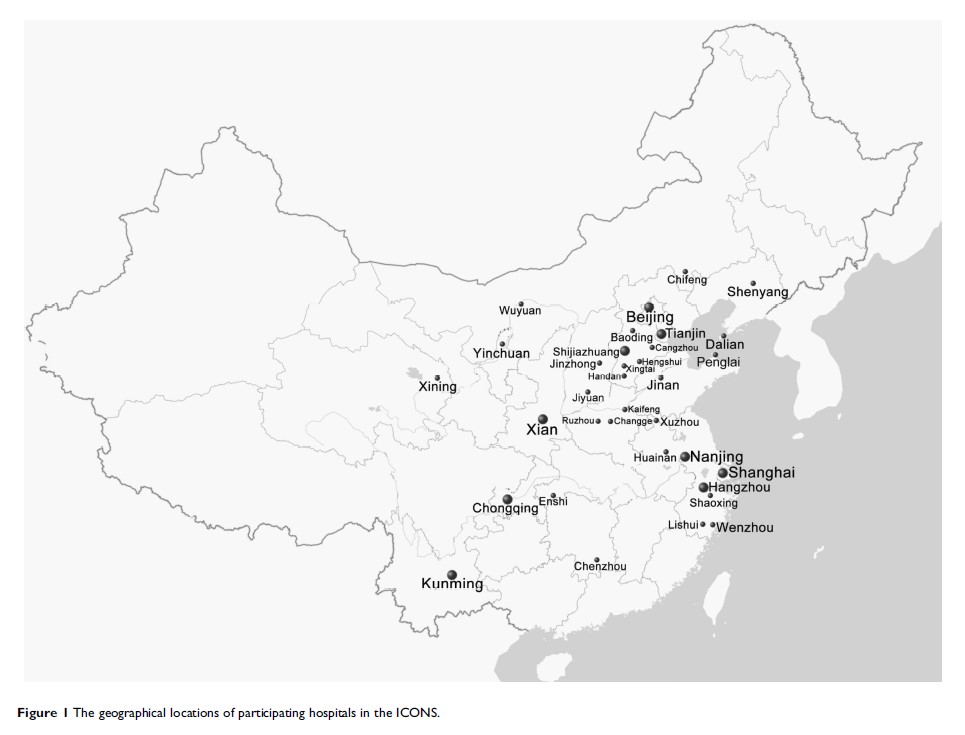
Methods: The data of this study come from the impairment of cognition and Sleep after acute ischemic stroke or transient ischemic attack in Chinese patients study (ICONS), a nationwide multicenter prospective registry that recruited consecutive AIS or transient ischemic attack in-hospital patients within 7 days after onset. Patients were followed for Montreal Cognitive Assessment (MoCA) scale at 2-week (2w), 3 months (3m) and 12 months (12m). CI was defined as MoCA score≦22. No cognitive impairment (NCI) was defined as MoCA score> 22.
Results: A total of 2432 AIS patients were enrolled in this study. Overall, 72.94% of patients were male and the average age was 60.95 years. Median National Institutes of Health Stroke Scale score was 3. The occurrence rate of CI was 52.38%, 35.55% and 34.16% at 2w, 3m and 12m. Among patients with CI at 2w and 3m, 39.9% and 27.9% of patients returned to NCI at next follow-up point. At 3m and 12m follow-up, there were also 9.6% and 12.7% new CI patients. The two cognitive items with the highest abnormal rate were “Delayed recall” (89.35%, 83.33% and 82.80%) and “Visuospatial/executive” (78.91%, 73.42% and 70.08%). The cognitive item with the highest percentage of improved patients was “Orientation” (60.91– 76.68%), and the cognitive item with the lowest percentage of improved patients was “Language” (35.85– 44.50%).
Conclusion: CI had a relatively high occurrence at 2w to 12m after AIS. CI at 3m and 12m was significantly lower than that at 2w after stroke. The occurrence of abnormalities and recovery probability for different cognitive items also differed greatly.
Keywords: cognitive impairment, ischemic stroke, longitudinal cohort study, occurrence