115195
论文已发表
注册即可获取德孚的最新动态
IF 收录期刊
- 3.6 Breast Cancer (Dove Med Press)
- 4.3 Clin Epidemiol
- 2.6 Cancer Manag Res
- 3.2 Infect Drug Resist
- 4.1 Clin Interv Aging
- 6.1 Drug Des Dev Ther
- 4.1 Int J Chronic Obstr
- 8.7 Int J Nanomed
- 2.5 Int J Women's Health
- 3.2 Neuropsych Dis Treat
- 2.4 OncoTargets Ther
- 2.6 Patient Prefer Adher
- 2.6 Ther Clin Risk Manag
- 3.1 J Pain Res
- 3.5 Diabet Metab Synd Ob
- 4.5 Psychol Res Behav Ma
- 3.4 Nat Sci Sleep
- 2.4 Pharmgenomics Pers Med
- 2.6 Risk Manag Healthc Policy
- 4.6 J Inflamm Res
- 2.3 Int J Gen Med
- 3.9 J Hepatocell Carcinoma
- 3.3 J Asthma Allergy
- 2.5 Clin Cosmet Investig Dermatol
- 3.0 J Multidiscip Healthc

用于非小细胞肺癌患者的免疫检查点抑制剂的经济评价:一个系统性回顾
Authors Li N, Zheng H, Zheng B, Chen C, Cai H, Liu M
Received 1 February 2020
Accepted for publication 9 May 2020
Published 12 June 2020 Volume 2020:12 Pages 4503—4518
DOI https://doi.org/10.2147/CMAR.S248020
Checked for plagiarism Yes
Review by Single-blind
Peer reviewer comments 2
Editor who approved publication: Dr Antonella D'Anneo
Objective: This review aimed to assess the quality of available evidence on the economic evaluations of immune checkpoint inhibitors in patients with non-small cell lung cancer (NSCLC) and provide evidence to improve the efficiency of healthcare resources.
Materials and Methods: Literature search was performed using some electronic databases (PubMed, Embase and Cochrane Central Register of Controlled Trials). Final search was performed in December 2019. Study characteristics and results were recorded and compared. The quality of the studies was assessed using the Consolidated Health Economic Evaluation Reporting Standards (CHEERS) checklists. We did not elaborate the restrictions on the target population. We included patients with squamous or non-squamous NSCLC and metastatic or advanced cancer.
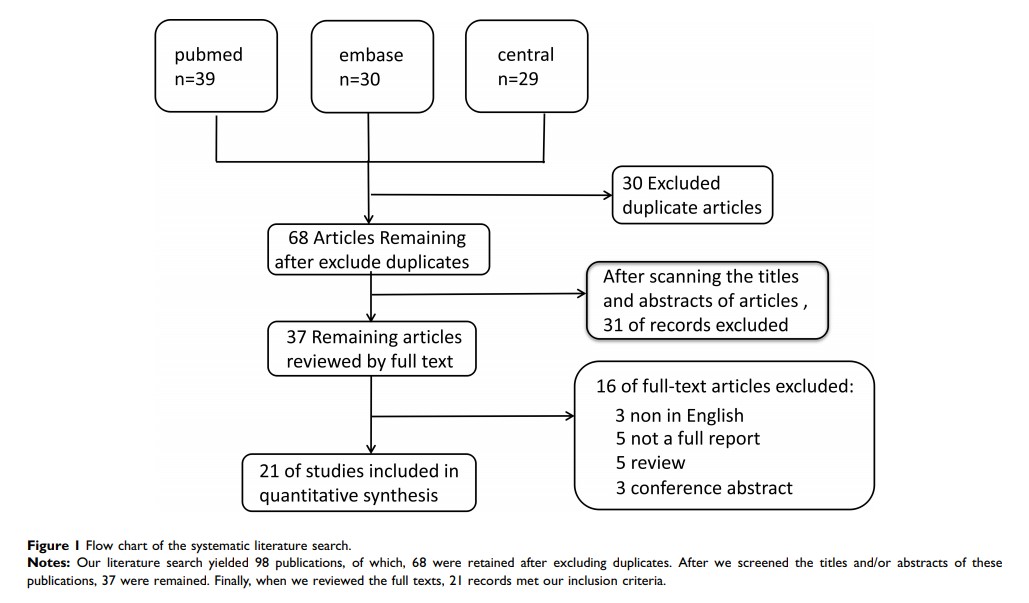
Results: Of 98 papers considered, 21 were chosen for this review. Most of them are cost-effectiveness analysis. Comparative regimens consisted of either immune checkpoint inhibitor monotherapy, immune checkpoint inhibitor plus chemotherapy, or chemotherapy alone. Fourteen, four, and three studies were about pembrolizumab, nivolumab, and atezolizumab, respectively. The methods mostly used in these studies were modeling and sensitivity analysis. All studies used quality-adjusted life year (QALY) and life years (LY) as outcomes. Most studies were conducted in high-income countries. Based on the willingness to pay threshold, atezolizumab, and pembrolizumab were found to be cost-effective in one and 10 studies, respectively. None of the studies concluded that nivolumab was cost-effective. For quality assessment, all studies fulfilled more than 50% of the CHEERS checklist.
Conclusion: The included studies indicated that pembrolizumab regimens are cost-effective as first-line treatment for patients with NSCLC in developed countries. Nivolumab and atezolizumab are likely to be cost-effective as second-line treatment but not as first-line treatment.
Keywords: non-small cell lung cancer, economic analyses, immune checkpoint inhibitors, systematic review, PD-L1 positive