115195
论文已发表
注册即可获取德孚的最新动态
IF 收录期刊
- 3.6 Breast Cancer (Dove Med Press)
- 4.3 Clin Epidemiol
- 2.6 Cancer Manag Res
- 3.2 Infect Drug Resist
- 4.1 Clin Interv Aging
- 6.1 Drug Des Dev Ther
- 4.1 Int J Chronic Obstr
- 8.7 Int J Nanomed
- 2.5 Int J Women's Health
- 3.2 Neuropsych Dis Treat
- 2.4 OncoTargets Ther
- 2.6 Patient Prefer Adher
- 2.6 Ther Clin Risk Manag
- 3.1 J Pain Res
- 3.5 Diabet Metab Synd Ob
- 4.5 Psychol Res Behav Ma
- 3.4 Nat Sci Sleep
- 2.4 Pharmgenomics Pers Med
- 2.6 Risk Manag Healthc Policy
- 4.6 J Inflamm Res
- 2.3 Int J Gen Med
- 3.9 J Hepatocell Carcinoma
- 3.3 J Asthma Allergy
- 2.5 Clin Cosmet Investig Dermatol
- 3.0 J Multidiscip Healthc

超级增强子的异常激活增强了肺腺癌的致癌性
Authors Zhou J, Wang D, Tang D, Huang W
Received 8 May 2020
Accepted for publication 29 July 2020
Published 15 September 2020 Volume 2020:12 Pages 8509—8518
DOI https://doi.org/10.2147/CMAR.S258497
Checked for plagiarism Yes
Review by Single anonymous peer review
Peer reviewer comments 2
Editor who approved publication: Dr Seema Singh
Background: Lung tumors and normal lung tissues show large differences in epigenetic modification which can affect the chromosome structure and expression of genes. However, the epigenetic reprogramming in lung adenocarcinoma remains unclear.
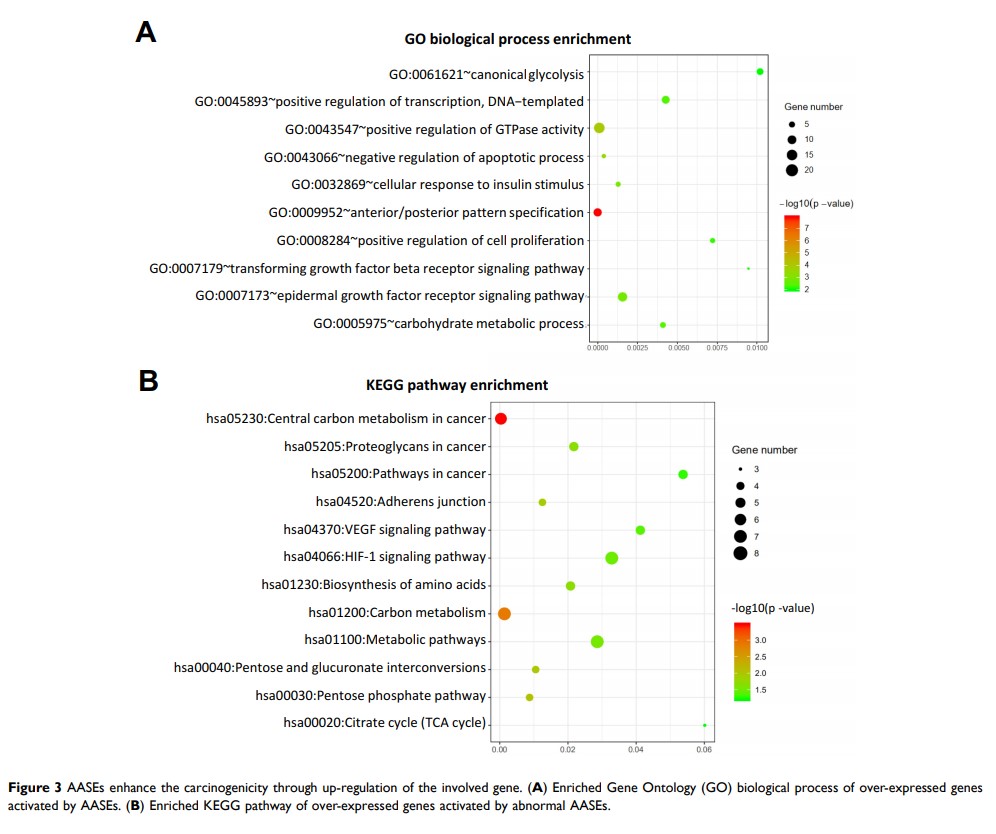
Methods and Results: With the bioinformatics analysis, we found that some activated super-enhancers (SEs) only appear in lung adenocarcinoma cells, and 781 abnormal activated super-enhancers (AASEs) were found. Not only are the traditional oncogenes found to be activated by AASEs, such as MET and SLC2A1 , but also some new genes were activated by AASEs, which probably contributes to the carcinogenic process in lung cancer. The enrichment analysis of the genes activated by AASEs shows that the glycolysis process and cell proliferation were enhanced and the apoptotic process was negatively regulated. Two AASEs were separately knockout by CRISPR/Cas9 in A549, PC-9, and H1299 cell lines and the expression of target genes decreased. The motif of CTCF , SMARCA1 , SOX4 , FOXM1 , IRF3 , IRF7 , and STAT2 was enriched in AASEs, supporting that the chromosome structure changed and these transcription factors would be the master regulators on the formation of AASEs.
Conclusion: This study provided comprehensive insight into the mechanisms of SEs, as well as a potential therapeutic target for lung cancer.
Keywords: lung adenocarcinoma, epigenetic, super-enhancer, transcription factors