115195
论文已发表
注册即可获取德孚的最新动态
IF 收录期刊
- 3.6 Breast Cancer (Dove Med Press)
- 4.3 Clin Epidemiol
- 2.6 Cancer Manag Res
- 3.2 Infect Drug Resist
- 4.1 Clin Interv Aging
- 6.1 Drug Des Dev Ther
- 4.1 Int J Chronic Obstr
- 8.7 Int J Nanomed
- 2.5 Int J Women's Health
- 3.2 Neuropsych Dis Treat
- 2.4 OncoTargets Ther
- 2.6 Patient Prefer Adher
- 2.6 Ther Clin Risk Manag
- 3.1 J Pain Res
- 3.5 Diabet Metab Synd Ob
- 4.5 Psychol Res Behav Ma
- 3.4 Nat Sci Sleep
- 2.4 Pharmgenomics Pers Med
- 2.6 Risk Manag Healthc Policy
- 4.6 J Inflamm Res
- 2.3 Int J Gen Med
- 3.9 J Hepatocell Carcinoma
- 3.3 J Asthma Allergy
- 2.5 Clin Cosmet Investig Dermatol
- 3.0 J Multidiscip Healthc

上海市将高血压患者的电子健康记录用于卒中一级预防的探索性研究
Authors Yang T, Li F, Zhu B, Chen Y, Chen D, Wang C, Hou Z, Xu J, Gu S, Liu J, Wu Z, Wang Y, Jin C
Received 4 July 2020
Accepted for publication 4 September 2020
Published 28 September 2020 Volume 2020:13 Pages 1781—1789
DOI https://doi.org/10.2147/RMHP.S269535
Checked for plagiarism Yes
Review by Single anonymous peer review
Peer reviewer comments 2
Editor who approved publication: Professor Marco Carotenuto
Background: The value of identifying and targeting population demographics at high risk of stroke based on patient-reported outcomes (PROs) with electronic health records (EHRs) in Shanghai is largely undiscovered.
Aim: To test the hypothesis that establishing an evidence-based support system composed of PROs integrated with EHRs could be effective at identifying individuals at high risk of suffering from stroke.
Methods: The patients included in this study joined the hypertensive patient management system from 2014 to 2018. We merged the Hypertension Patients Management Database and the Diabetes Mellitus Patients Management Database of Shanghai Jiading district, then kept the hypertension patients with or without diabetes. We subsequently performed a screen analysis utilizing EHRs to target the population with any risk factor for stroke, namely, hypertension, diabetes mellitus, obesity, smoking and physical inactivity. We also calculated the distribution of each risk factor and the combinations of risk factors.
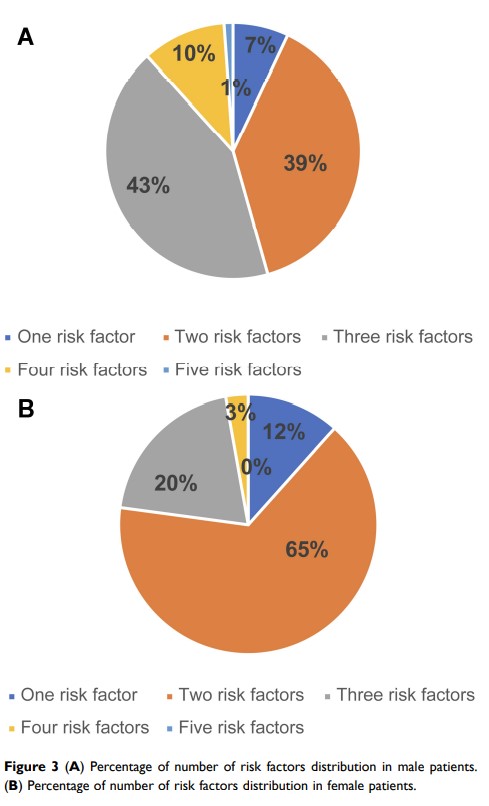
Results: In the Jiading District of Shanghai, 46,580 hypertensive patients with complete baseline information joined the hypertensive patient management system from 2014 to 2018. The majority of the patients were aged above 60 years old. Physical inactivity (83.24%), smoking (24.07%), diabetes (16.87%), and obesity (12.23%) were highly prevalent in hypertensive participants. Approximately 4377 patients were diagnosed with hypertension exclusively, accounting for 9.70% of the total number of patients in this study. Meanwhile, approximately 52.47% of the patients were diagnosed with two concurrent risk factors, and 38.13% of the patients had hypertension, meaning that 17,762 patients could be labeled as the high-risk population for stroke according to the criteria established by the National Stroke Screening Survey.
Conclusion: Our exploratory findings demonstrate the feasibility of pinpointing and targeting populations at high risk of stroke using the EHRs of hypertensive patients.
Keywords: hypertension, electronic health records, EHRs, stroke risk factors