117207
论文已发表
注册即可获取德孚的最新动态
IF 收录期刊
- 3.6 Breast Cancer (Dove Med Press)
- 4.3 Clin Epidemiol
- 2.6 Cancer Manag Res
- 3.2 Infect Drug Resist
- 4.1 Clin Interv Aging
- 6.1 Drug Des Dev Ther
- 4.1 Int J Chronic Obstr
- 8.7 Int J Nanomed
- 2.5 Int J Women's Health
- 3.2 Neuropsych Dis Treat
- 2.4 OncoTargets Ther
- 2.6 Patient Prefer Adher
- 2.6 Ther Clin Risk Manag
- 3.1 J Pain Res
- 3.5 Diabet Metab Synd Ob
- 4.5 Psychol Res Behav Ma
- 3.4 Nat Sci Sleep
- 2.4 Pharmgenomics Pers Med
- 2.6 Risk Manag Healthc Policy
- 4.6 J Inflamm Res
- 2.3 Int J Gen Med
- 3.9 J Hepatocell Carcinoma
- 3.3 J Asthma Allergy
- 2.5 Clin Cosmet Investig Dermatol
- 3.0 J Multidiscip Healthc

肺感染控制窗口期作为 COPD 患者治疗中序贯通气的切换点:一项综合分析
Authors Lv Y, Lv Q, Lv Q, Lai T
Received 5 November 2016
Accepted for publication 28 March 2017
Published 24 April 2017 Volume 2017:12 Pages 1255—1267
DOI https://doi.org/10.2147/COPD.S126736
Checked for plagiarism Yes
Review by Single-blind
Peer reviewers approved by Dr Colin Mak
Peer reviewer comments 2
Editor who approved publication: Dr Richard Russell
Purpose: Choosing the appropriate time to switch to noninvasive positive-pressure
ventilation (NPPV) plays a crucial role in promoting successful weaning.
However, optimal timing for transitioning and weaning patients from mechanical
ventilation (MV) to NPPV has not been clearly established. In China, the
pulmonary infection control (PIC) window as a switching point for weaning from
MV has been performed for many years, without definitive evidence of clinical
benefit. This study aimed to summarize the evidence for NPPV at the PIC window
for patients with respiratory failure from COPD.
Methods: A comprehensive search for randomized controlled
trials (RCTs) was performed. The trials were all parallel studies comparing the
PIC window weaning strategy versus conventional weaning strategy in treatment
of patients with respiratory failure due to COPD.
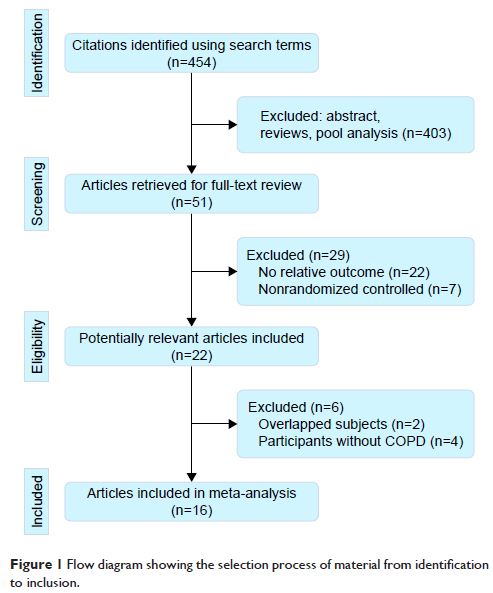
Results: Sixteen studies of 647 participants were eligible.
When compared with conventional weaning strategy, early extubation followed by
NPPV at the point of PIC window significantly reduced the mortality rate (risk
ratios [RRs] 0.36, 95% confidence interval [CI] 0.23 to 0.57) and
ventilator-associated pneumonia (VAP) (RR 0.28, 95% CI 0.19 to 0.41); it also
decreased the duration of invasive ventilation (weighted mean difference [WMD]
-7.68 days, 95% CI -9.43 to -5.93) and total duration of ventilation (WMD -5.93
days, 95% CI -7.29 to -4.58), which also shortened the lengths of stay in an
intensive care unit (WMD -8.51 days, 95% CI -10.23 to -6.79), as well as length
of stay in hospital (WMD -8.47 days, 95% CI -8.61 to -7.33).
Conclusion: The results showed that the PIC window as a switching
point for sequential ventilation in treatment of respiratory failure in COPD
patients may be beneficial. It might yield not only relevant information for
caregivers in China but also new insights for considering the PIC window by
physicians in other countries.
Keywords: mechanical ventilation,
ventilator-associated pneumonia, weaning, acute exacerbation, spontaneous
breathing trial, intensive care unit