115195
论文已发表
注册即可获取德孚的最新动态
IF 收录期刊
- 3.6 Breast Cancer (Dove Med Press)
- 4.3 Clin Epidemiol
- 2.6 Cancer Manag Res
- 3.2 Infect Drug Resist
- 4.1 Clin Interv Aging
- 6.1 Drug Des Dev Ther
- 4.1 Int J Chronic Obstr
- 8.7 Int J Nanomed
- 2.5 Int J Women's Health
- 3.2 Neuropsych Dis Treat
- 2.4 OncoTargets Ther
- 2.6 Patient Prefer Adher
- 2.6 Ther Clin Risk Manag
- 3.1 J Pain Res
- 3.5 Diabet Metab Synd Ob
- 4.5 Psychol Res Behav Ma
- 3.4 Nat Sci Sleep
- 2.4 Pharmgenomics Pers Med
- 2.6 Risk Manag Healthc Policy
- 4.6 J Inflamm Res
- 2.3 Int J Gen Med
- 3.9 J Hepatocell Carcinoma
- 3.3 J Asthma Allergy
- 2.5 Clin Cosmet Investig Dermatol
- 3.0 J Multidiscip Healthc

经鼻内镜和鼻内联合方法对额窦脑脊液鼻漏进行手术治疗
Authors Yang Q, Li P, Huang J, Wang W, Bian SY, Huang X, Liu X, Zhang G
Received 12 February 2017
Accepted for publication 27 April 2017
Published 9 June 2017 Volume 2017:13 Pages 709—715
DOI https://doi.org/10.2147/TCRM.S134537
Checked for plagiarism Yes
Review by Single-blind
Peer reviewers approved by Dr Hoa Le
Peer reviewer comments 2
Editor who approved publication: Professor Deyun Wang
Abstract: The aim of this study was to summarize and analyze the outcomes of
frontal sinus cerebrospinal fluid rhinorrhea (FS-CSFR) treated by transnasal
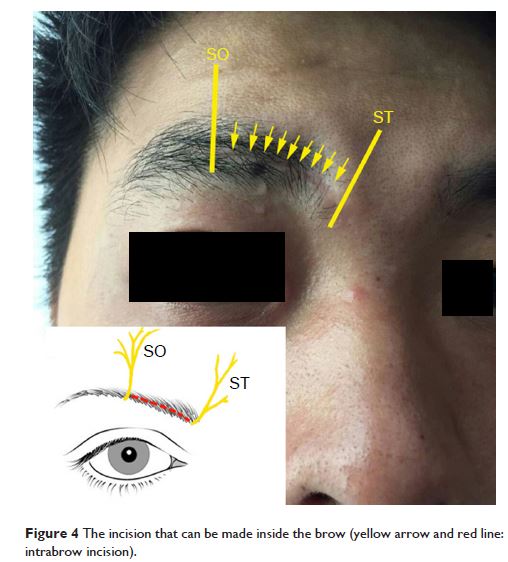
endoscopic and combined intra–extranasal approach. Clinical data on 20 cases of
FS-CSFR patients from 2005 to 2013, with emphasis on the postoperative
complications, clinical outcomes, and key technology involved in the combined
intra–extranasal procedure, were retrospectively reviewed. Among the 20 cases,
12 were treated by combined intra–extranasal procedure; the other eight cases
were initially treated by transnasal endoscopic approach alone, and five of
them (5/8, 62.5%) were successfully treated and three failed. The three failed
cases subsequently underwent combined intra–extranasal approach. A total of 15
cases, who received combined procedure, experienced fast recovery, had mild
complications, and had no significant facial scars, and no CSFR recurrence was
observed. Combined intra–extranasal approach offers advantages in not only
overcoming the difficulty of insufficient exposure of defects during transnasal
endoscopic procedure but also improving the success rate of repair.
Keywords: frontal sinus, cerebrospinal fluid
rhinorrhea, endoscopy, otorhinolaryngologic surgical procedure, extracranial
repair