117333
论文已发表
注册即可获取德孚的最新动态
IF 收录期刊
- 3.6 Breast Cancer (Dove Med Press)
- 4.3 Clin Epidemiol
- 2.6 Cancer Manag Res
- 3.2 Infect Drug Resist
- 4.1 Clin Interv Aging
- 6.1 Drug Des Dev Ther
- 4.1 Int J Chronic Obstr
- 8.7 Int J Nanomed
- 2.5 Int J Women's Health
- 3.2 Neuropsych Dis Treat
- 2.4 OncoTargets Ther
- 2.6 Patient Prefer Adher
- 2.6 Ther Clin Risk Manag
- 3.1 J Pain Res
- 3.5 Diabet Metab Synd Ob
- 4.5 Psychol Res Behav Ma
- 3.4 Nat Sci Sleep
- 2.4 Pharmgenomics Pers Med
- 2.6 Risk Manag Healthc Policy
- 4.6 J Inflamm Res
- 2.3 Int J Gen Med
- 3.9 J Hepatocell Carcinoma
- 3.3 J Asthma Allergy
- 2.5 Clin Cosmet Investig Dermatol
- 3.0 J Multidiscip Healthc

癌症疼痛管理在中国:基于 ACHEON 调查的现状和实践意义
Authors Xia Z
Received 23 November 2016
Accepted for publication 14 March 2017
Published 18 August 2017 Volume 2017:10 Pages 1943—1952
DOI https://doi.org/10.2147/JPR.S128533
Checked for plagiarism Yes
Review by Single-blind
Peer reviewers approved by Dr Amy Norman
Peer reviewer comments 3
Editor who approved publication: Dr Michael Schatman
Purpose: Cancer pain can seriously impact the quality of life (QoL) of patients,
and optimal management practices are therefore of paramount importance. The
ACHEON survey queried physicians and patients from 10 Asian countries/regions
to assess current clinical practices in cancer pain management in Asia. This
study presents the data obtained for cancer pain management in mainland China,
with an emphasis on practices related to opioid drugs.
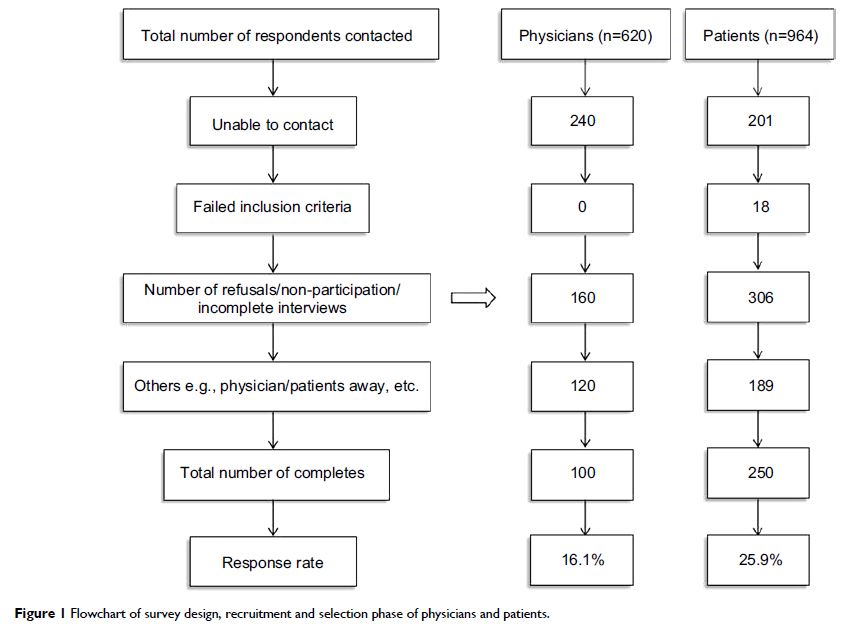
Materials and methods: In several tertiary hospitals across China, 250
patients experiencing cancer pain and 100 physicians were surveyed on questions
designed to assess current cancer pain management practices and cancer pain
impact on QoL.
Results: The patient survey showed that 88% of patients
reported moderate-to-severe cancer pain, with a median duration of
6 months. The physician survey showed that medical school/residency
training with regard to cancer pain management was inadequate in ~80% of
physicians. A total of 80% of physicians and 67.2% of patients reported that
pain scale was used during pain assessment; 84% of physicians expressed that
physician-perceived pain severity was not completely consistent with actual
pain the patient experienced. Of the 147 patients who recalled the medication
received, 83.7% were administered opioid prescriptions. Of the 240 patients who
received treatment, 43.8% perceived the inadequacy of controlling pain. The
primary barriers from physicians perceived to optimal pain management included
patients’ fear of side effects (58%), patients’ fear of addiction (53%), patients’
reluctance to report pain (43%), physicians’ reluctance to prescribe (29%),
physicians’ inadequacy of pain assessment (27%) and excessive regulation of
opioid analgesics (47%).
Conclusion: Knowledge of cancer pain management should be
strengthened among physicians. Quantitative pain assessment and principle-based
pain management should be combined to achieve pain relief. Misconceptions about
opioids in patients and physicians and poor report about pain should be
overcome through training/education to improve QoL of patients impacted by
pain.
Keywords: cancer pain,
pain management, opioid drugs, questionnaires