119661
论文已发表
注册即可获取德孚的最新动态
IF 收录期刊
- 3.6 Breast Cancer (Dove Med Press)
- 4.3 Clin Epidemiol
- 2.6 Cancer Manag Res
- 3.2 Infect Drug Resist
- 4.1 Clin Interv Aging
- 6.1 Drug Des Dev Ther
- 4.1 Int J Chronic Obstr
- 8.7 Int J Nanomed
- 2.5 Int J Women's Health
- 3.2 Neuropsych Dis Treat
- 2.4 OncoTargets Ther
- 2.6 Patient Prefer Adher
- 2.6 Ther Clin Risk Manag
- 3.1 J Pain Res
- 3.5 Diabet Metab Synd Ob
- 4.5 Psychol Res Behav Ma
- 3.4 Nat Sci Sleep
- 2.4 Pharmgenomics Pers Med
- 2.6 Risk Manag Healthc Policy
- 4.6 J Inflamm Res
- 2.3 Int J Gen Med
- 3.9 J Hepatocell Carcinoma
- 3.3 J Asthma Allergy
- 2.5 Clin Cosmet Investig Dermatol
- 3.0 J Multidiscip Healthc

冠心病患者社会资本与遵从健康生活方式之间的相关性
Authors Fang J, Wang JW, Li J, Li H, Shao C
Received 1 May 2017
Accepted for publication 1 August 2017
Published 30 September 2017 Volume 2017:11 Pages 1701—1707
DOI https://doi.org/10.2147/PPA.S140787
Checked for plagiarism Yes
Review by Single-blind
Peer reviewers approved by Dr Akshita Wason
Peer reviewer comments 2
Editor who approved publication: Dr Naifeng Liu
Objective: To investigate the correlates of social capital and adherence to
healthy lifestyle in patients with coronary heart disease (CHD).
Methods: This register-based, cross-sectional study consisted
of individuals diagnosed with CHD at four community health service centers,
Shanghai, China, between April and July 2016 (n=609). The sociodemographic
characteristics, social capital, adherence to physical activity, and nutrition
data were obtained through face-to-face interviews. Social capital was assessed
by social participation, social networking, social support, social trust, and
sense of belonging. Physical activity and nutrition were measured with the
Health-Promoting Lifestyle Profile II. The independent two-sample t-test and Pearson’s correlations
were used to analyze associations among variables. Hierarchical multiple
regression models were used to evaluate effects of social capital on adherence
to physical activity and nutrition.
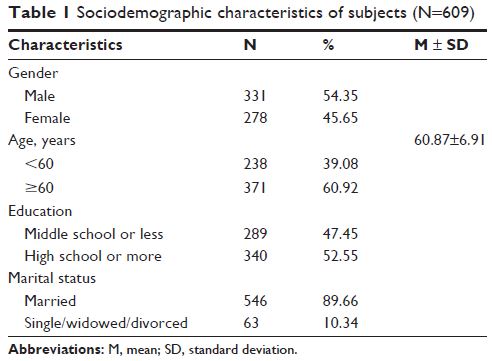
Results: The average age of the sample was 60.87 (standard
deviation [SD] =6.91), with 54.4% being male and 45.6% female. The average
score of physical activity and nutrition were 2.38 (SD =0.59) and 2.78 (SD
=0.50), respectively. The final model significantly explained 28.9% of variance
in physical activity (F =34.96, P <0.001) and 30.5% of
variance in nutrition (F =37.73, P <0.001). Most of the
subdimensions of social capital were significantly associated with physical
activity and nutrition, after controlling for marital status and education
level.
Conclusion: The results suggested that social capital was
the correlate of adherence to long-term healthy lifestyle, including physical
activity and nutrition. These findings highlight the need to take into account
social capital in developing intervention strategies to improve the adherence
to the long-term healthy lifestyle for patients with CHD.
Keywords: social capital,
adherence, healthy lifestyle, coronary heart disease