115195
论文已发表
注册即可获取德孚的最新动态
IF 收录期刊
- 3.6 Breast Cancer (Dove Med Press)
- 4.3 Clin Epidemiol
- 2.6 Cancer Manag Res
- 3.2 Infect Drug Resist
- 4.1 Clin Interv Aging
- 6.1 Drug Des Dev Ther
- 4.1 Int J Chronic Obstr
- 8.7 Int J Nanomed
- 2.5 Int J Women's Health
- 3.2 Neuropsych Dis Treat
- 2.4 OncoTargets Ther
- 2.6 Patient Prefer Adher
- 2.6 Ther Clin Risk Manag
- 3.1 J Pain Res
- 3.5 Diabet Metab Synd Ob
- 4.5 Psychol Res Behav Ma
- 3.4 Nat Sci Sleep
- 2.4 Pharmgenomics Pers Med
- 2.6 Risk Manag Healthc Policy
- 4.6 J Inflamm Res
- 2.3 Int J Gen Med
- 3.9 J Hepatocell Carcinoma
- 3.3 J Asthma Allergy
- 2.5 Clin Cosmet Investig Dermatol
- 3.0 J Multidiscip Healthc

基于洗必泰的沐浴露用于预防耐甲氧西林的金黄色葡萄球菌和耐万古霉素的肠球菌的定植和感染 一项更新的综合分析
Authors Xiao G, Chen Z, Lv X
Received 9 April 2018
Accepted for publication 11 June 2018
Published 13 September 2018 Volume 2018:11 Pages 1473—1481
DOI https://doi.org/10.2147/IDR.S170497
Checked for plagiarism Yes
Review by Single-blind
Peer reviewers approved by Dr Colin Mak
Peer reviewer comments 2
Editor who approved publication: Dr Joachim Wink
Background: The effects of chlorhexidine-based body washing (CHW) on health care-associated infections have been reported in numerous studies, while their findings remain conflicting. This study aims to update the evidence for the effects of CHW on the risk of colonization or infection with hospital-acquired methicillin-resistant Staphylococcus aureus (MRSA) and vancomycin-resistant Enterococcus (VRE).
Methods: Two independent authors searched PubMed, Embase, and Cochrane Library from inception through February 2018. We selected all observational studies or clinical trials for the effect of CHW on the risk of colonization and infection with hospital-acquired MRSA or VRE. Random-effects models were applied to calculate summary incidence rate ratios (IRRs) for the related associations.
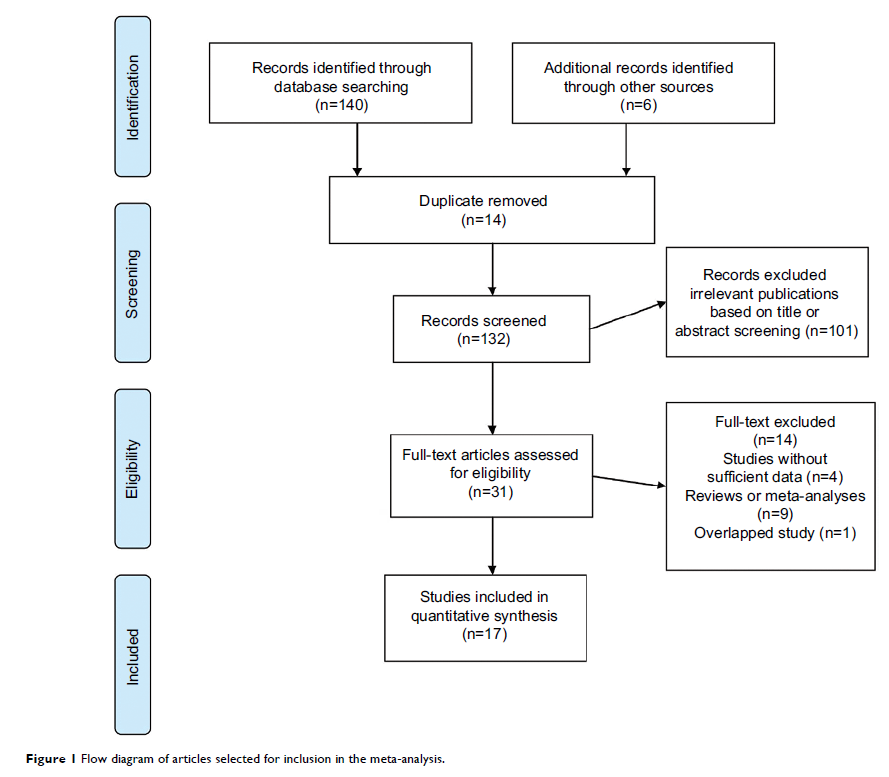
Results: Of 140 records identified, we obtained data from 17 relevant articles for meta-analysis. Compared with patients without antiseptic bathing, patients with CHW had a significantly lower risk of MRSA colonization (IRR 0.61, 95% CI 0.48–0.77) and VRE colonization (IRR 0.58, 95% CI 0.42–0.80). Similarly, we also noted that patients with CHW had a significantly lower risk of MRSA infection (IRR 0.65, 95% CI 0.52–0.81). However, no significantly lower risk of VRE infection (IRR 0.61, 95% CI 0.30–1.25) was noted in patients with CHW. Sensitivity analyses or trim-and-fill method confirmed the robustness of the findings.
Conclusion: Current evidence supports that patients with CHW had a significantly lower risk of MRSA or VRE colonization and a lower risk of MRSA infection. More evidence should be accumulated to reinforce these findings, especially on the effect of CHW on the risk of VRE infection.
Keywords: chlorhexidine, methicillin-resistant Staphylococcus aureus , MRSA, vancomycin-resistant Enterococcus , VRE, bathing, meta-analysis