115195
论文已发表
注册即可获取德孚的最新动态
IF 收录期刊
- 3.6 Breast Cancer (Dove Med Press)
- 4.3 Clin Epidemiol
- 2.6 Cancer Manag Res
- 3.2 Infect Drug Resist
- 4.1 Clin Interv Aging
- 6.1 Drug Des Dev Ther
- 4.1 Int J Chronic Obstr
- 8.7 Int J Nanomed
- 2.5 Int J Women's Health
- 3.2 Neuropsych Dis Treat
- 2.4 OncoTargets Ther
- 2.6 Patient Prefer Adher
- 2.6 Ther Clin Risk Manag
- 3.1 J Pain Res
- 3.5 Diabet Metab Synd Ob
- 4.5 Psychol Res Behav Ma
- 3.4 Nat Sci Sleep
- 2.4 Pharmgenomics Pers Med
- 2.6 Risk Manag Healthc Policy
- 4.6 J Inflamm Res
- 2.3 Int J Gen Med
- 3.9 J Hepatocell Carcinoma
- 3.3 J Asthma Allergy
- 2.5 Clin Cosmet Investig Dermatol
- 3.0 J Multidiscip Healthc

用于牙周组织设计的聚乳酸-羟基乙酸共聚物壳聚糖/银纳米粒子混合物的制备及生物学特性
Authors Xue Y, Hong X, Gao J, Shen R, Ye Z
Received 17 August 2018
Accepted for publication 27 November 2018
Published 11 January 2019 Volume 2019:14 Pages 483—498
DOI https://doi.org/10.2147/IJN.S184396
Checked for plagiarism Yes
Review by Single-blind
Peer reviewers approved by Dr Justinn Cochran
Peer reviewer comments 3
Editor who approved publication: Dr Linlin Sun
Objective: This
study aims to produce nanoparticles of chitosan (CS), poly(lactic-co-glycolic
acid) (PLGA), and silver and investigate the optimal composite ratio of these
three materials for periodontal tissue regeneration.
Methods: PLGA
nanoparticles (nPLGA), CS nanoparticles (nCS), and silver nanoparticles (nAg)
were prepared. The antibacterial properties of single nanoparticles and their
effects on the proliferation and mineralization of periodontal membrane cells
were investigated. Different ratios of nPLGA and nCS were combined, the
proliferation and mineralization of periodontal membrane cells were
investigated, and based on the results, the optimal ratio was determined.
Finally, nPLGA and nCS in optimal ratio were combined with nAg, and the effects
of the complex of these three materials on the proliferation and mineralization
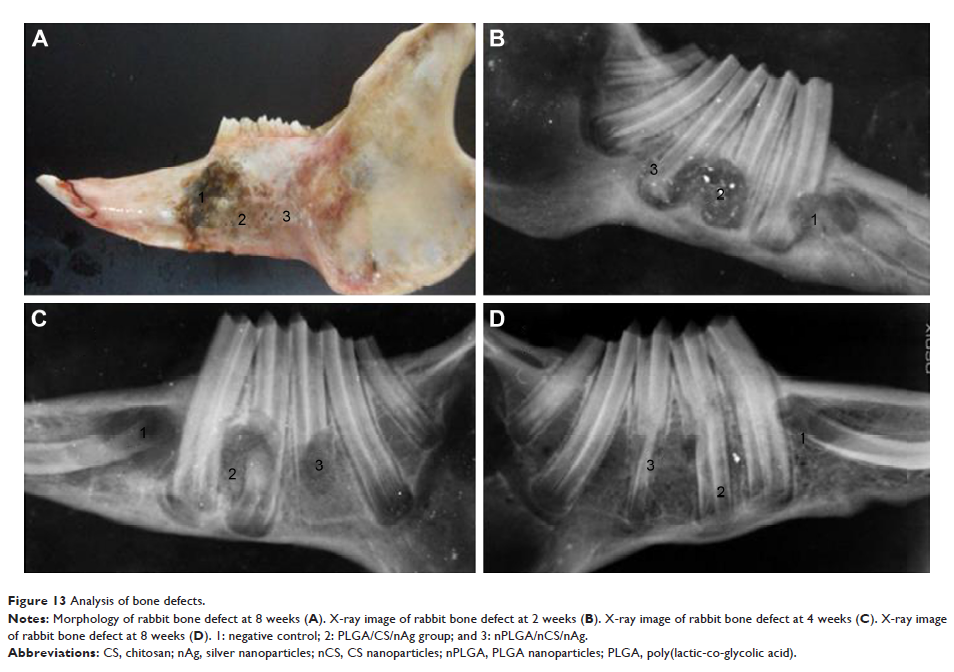
of periodontal membrane cells were investigated and tested in animals.
Results: The
single nanoparticles were found to have no cytotoxicity and were able to
promote cell mineralization. nCS and nAg in low concentrations showed
antibacterial activity; however, nAg inhibited cell proliferation. The nPLGA
and nCS complex in 3:7 ratio contributed to cell mineralization and had no
cytotoxicity. nPLGA/nCS/nAg complex, which had the optimal proportion of the
three materials, showed no cytotoxicity and contributed to cell mineralization.
Conclusion: nPLGA/nCS/nAg
complex had no cytotoxicity and contributed to cell mineralization. The 3:7
ratio of nPLGA/nCS and 50 µg/mL nAg were found as the optimal proportion of the
three materials.
Keywords: nanoparticles,
bone regeneration, periodontitis