117333
论文已发表
注册即可获取德孚的最新动态
IF 收录期刊
- 3.6 Breast Cancer (Dove Med Press)
- 4.3 Clin Epidemiol
- 2.6 Cancer Manag Res
- 3.2 Infect Drug Resist
- 4.1 Clin Interv Aging
- 6.1 Drug Des Dev Ther
- 4.1 Int J Chronic Obstr
- 8.7 Int J Nanomed
- 2.5 Int J Women's Health
- 3.2 Neuropsych Dis Treat
- 2.4 OncoTargets Ther
- 2.6 Patient Prefer Adher
- 2.6 Ther Clin Risk Manag
- 3.1 J Pain Res
- 3.5 Diabet Metab Synd Ob
- 4.5 Psychol Res Behav Ma
- 3.4 Nat Sci Sleep
- 2.4 Pharmgenomics Pers Med
- 2.6 Risk Manag Healthc Policy
- 4.6 J Inflamm Res
- 2.3 Int J Gen Med
- 3.9 J Hepatocell Carcinoma
- 3.3 J Asthma Allergy
- 2.5 Clin Cosmet Investig Dermatol
- 3.0 J Multidiscip Healthc

使用瑞芬太尼与其他药理学方法预防依托咪酯诱导的肌阵挛的疗效和安全性比较:对随机对照试验的一项综合分析
Authors Lang B, Zhang L, Li F, Lin Y, Zhang W, Yang C
Received 3 January 2019
Accepted for publication 10 April 2019
Published 9 May 2019 Volume 2019:13 Pages 1593—1607
DOI https://doi.org/10.2147/DDDT.S200200
Checked for plagiarism Yes
Review by Single-blind
Peer reviewers approved by Dr Amy Norman
Peer reviewer comments 2
Editor who approved publication: Professor Manfred Ogris
Objective: Myoclonus
was considered as one conundrum in etomidate induction, which led to multiple
risks during clinical anesthesia. The present study was conducted to compare
the efficacy of pretreatment with remifentanil to different pharmacological approaches
on reducing etomidate-induced myoclonus.
Methods: We
searched PubMed, Embase, Cochrane Library, and China National Knowledge
Infrastructure from the inception to October 2018. Randomized controlled trials
comparing remifentanil versus other pharmacological approaches in reducing
etomidate-induced myoclonus were eligible to be analyzed.
Results: Overall,
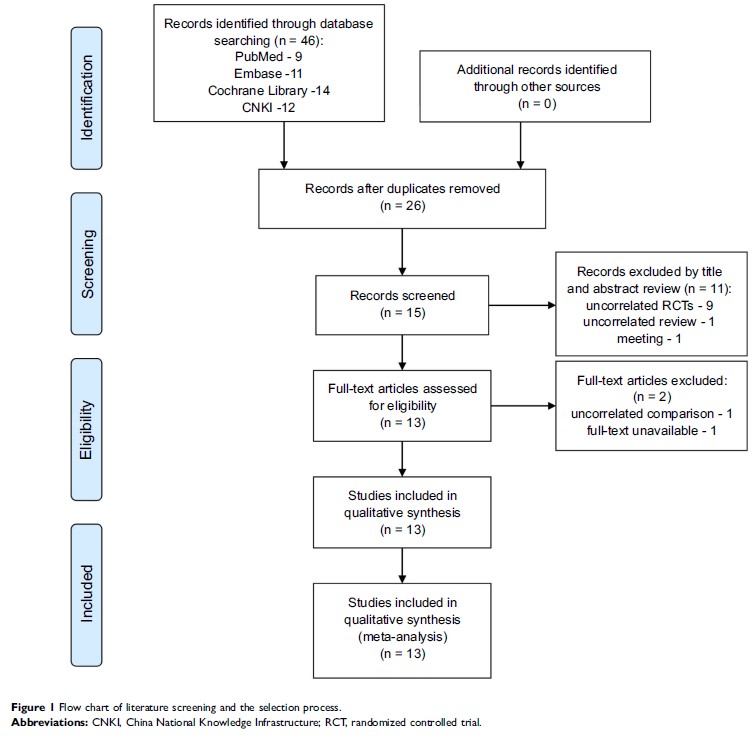
13 trials with 1,392 patients met with the inclusion criteria. 1) Pretreatment
with remifentanil could reduce the incidence of etomidate-induced myoclonus
compared to placebo and fentanyl; few differences were found between the use of
remifentanil and the use of midazolam: (incidence of myoclonus: 5.56% with
remifentanil vs 71.65% with saline, RR=0.08, with 95% CI [0.05, 0.12], P <0.0001; 3.80%
with remifentanil vs 13.33% with fentanyl, RR with 95% 0.31 [0.11, 0.86], P =0.02; 46.00% with
remifentanil vs 55.45% with midazolam, RR=0.82, with 95% CI [0.64, 1.06], P =0.13). 2)
Compared with placebo, pretreatment with remifentanil could reduce the
incidence of mild, moderate, and severe myoclonus; compared with midazolam,
patients receiving remifentanil experienced lower occurrence of severe
myoclonus; compared with fentanyl, pretreatment with remifentanil associated
with significant low occurrence of moderate and severe myoclonus. 3) The
outcomes also indicated that pretreatment with remifentanil could prevent
excessive hemodynamic changes after endotracheal intubation compared to
fentanyl.
Conclusions: Pretreatment
with remifentanil could be considered as one operative option to reduce both
incidence and severity of etomidate-induced myoclonus. Compared with fentanyl,
it also provides efficacy in preventing excessive hemodynamic changes after
endotracheal intubation. However, the best treatment and the proper
prophylactic dosage calls for more high quality evidence with large sample
size.
Keywords: remifentanil,
etomidate, myoclonus, meta-analysis, fentanyl, midazolam