115195
论文已发表
注册即可获取德孚的最新动态
IF 收录期刊
- 3.6 Breast Cancer (Dove Med Press)
- 4.3 Clin Epidemiol
- 2.6 Cancer Manag Res
- 3.2 Infect Drug Resist
- 4.1 Clin Interv Aging
- 6.1 Drug Des Dev Ther
- 4.1 Int J Chronic Obstr
- 8.7 Int J Nanomed
- 2.5 Int J Women's Health
- 3.2 Neuropsych Dis Treat
- 2.4 OncoTargets Ther
- 2.6 Patient Prefer Adher
- 2.6 Ther Clin Risk Manag
- 3.1 J Pain Res
- 3.5 Diabet Metab Synd Ob
- 4.5 Psychol Res Behav Ma
- 3.4 Nat Sci Sleep
- 2.4 Pharmgenomics Pers Med
- 2.6 Risk Manag Healthc Policy
- 4.6 J Inflamm Res
- 2.3 Int J Gen Med
- 3.9 J Hepatocell Carcinoma
- 3.3 J Asthma Allergy
- 2.5 Clin Cosmet Investig Dermatol
- 3.0 J Multidiscip Healthc

用于检测肾囊肿液中的人型支原体的新一代测序技术:一份病例报告
Authors Xiao N, Gai W, Hu WG, Li JX, Zhang Y, Zhao XY
Received 18 December 2018
Accepted for publication 5 April 2019
Published 23 May 2019 Volume 2019:12 Pages 1073—1079
DOI https://doi.org/10.2147/IDR.S198678
Checked for plagiarism Yes
Review by Single-blind
Peer reviewers approved by Ms Justinn Cochran
Peer reviewer comments 2
Editor who approved publication: Professor Suresh Antony
Background: Mycoplasma is
an opportunistic pathogen causing both urogenital and extragenital infections.
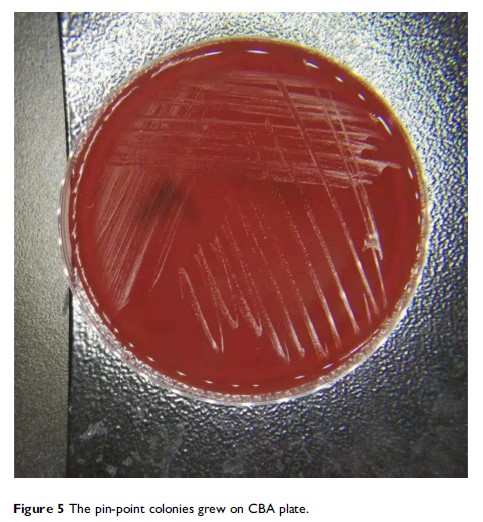
The lack of cell wall renders Mycoplasma difficult to culture and identify with
ordinary methods. Next-generation sequencing (NGS) is a new technology helping
a lot in the diagnosis of infective diseases. In this case, NGS played a key
role in the diagnosis of Mycoplasma infection.
Case presentation: A
mid-aged man suffering from renal cyst underwent cyst incision followed by
invasive treatments to eliminate hematoma caused by renal artery hemorrhage.
After the cyst incision operation, the patient had a persistent high
temperature. The persistent increase of blood neutrophile granulocyte count and
C-reaction protein suggested an unresolved infection. The empirically chosen
anti-infective agents were meropenem and linezolid since the ordinary bacterial
cultures of surgical site drainage and blood yielded a negative result. At
postoperation day (POD) 17, NGS result of his drainage clearly indicated the
pathogen was Mycoplasma hominis . At POD 24, the drug sensitivity
test showed resistance to quinolones, clarithromycin and erythromycin, but
intermediate to azithromycin. Since then, the antimicrobial agents were changed
into azithromycin and kept unchanged until the patient was fully recovered and
discharged at POD 39.
Conclusion: When the
ordinary laboratory diagnostic methods failed, NGS diagnosis could reduce the
hospitalization expenses and shorten the lengths of hospital stay.
Keywords: NGS, Mycoplasma , renal
cyst, infection