117518
论文已发表
注册即可获取德孚的最新动态
IF 收录期刊
- 3.6 Breast Cancer (Dove Med Press)
- 4.3 Clin Epidemiol
- 2.6 Cancer Manag Res
- 3.2 Infect Drug Resist
- 4.1 Clin Interv Aging
- 6.1 Drug Des Dev Ther
- 4.1 Int J Chronic Obstr
- 8.7 Int J Nanomed
- 2.5 Int J Women's Health
- 3.2 Neuropsych Dis Treat
- 2.4 OncoTargets Ther
- 2.6 Patient Prefer Adher
- 2.6 Ther Clin Risk Manag
- 3.1 J Pain Res
- 3.5 Diabet Metab Synd Ob
- 4.5 Psychol Res Behav Ma
- 3.4 Nat Sci Sleep
- 2.4 Pharmgenomics Pers Med
- 2.6 Risk Manag Healthc Policy
- 4.6 J Inflamm Res
- 2.3 Int J Gen Med
- 3.9 J Hepatocell Carcinoma
- 3.3 J Asthma Allergy
- 2.5 Clin Cosmet Investig Dermatol
- 3.0 J Multidiscip Healthc

CeO2NPs 通过增强抗氧化作用来减轻射频辐射,改善睾酮合成及在 Leydig 细胞中的时钟基因表达
Authors Qin F, Shen T, Cao H, Qian J, Zou D, Ye M, Pei H
Received 27 February 2019
Accepted for publication 15 May 2019
Published 24 June 2019 Volume 2019:14 Pages 4601—4611
DOI https://doi.org/10.2147/IJN.S206561
Checked for plagiarism Yes
Review by Single-blind
Peer reviewers approved by Dr Thiruganesh Ramasamy
Peer reviewer comments 2
Editor who approved publication: Dr Lei Yang
Introduction: The ratio of Ce3+/Ce4+ in their structure confers unique functions on cerium oxide nanoparticles (CeO2NPs) containing rare earth elements in scavenging free radicals and protecting against oxidative damage. The potential of CeO2NPs to protect testosterone synthesis in primary mouse Leydig cells during exposure to 1,800 MHz radiofrequency (RF) radiation was examined in vitro.
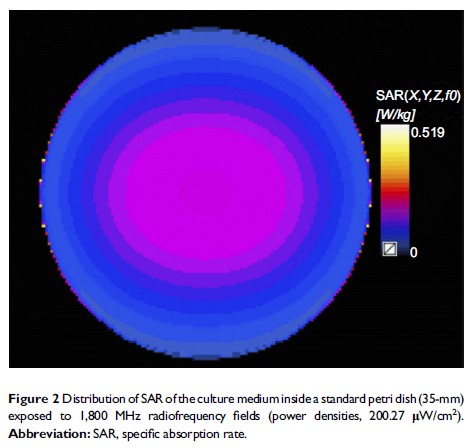
Methods: Leydig cells were treated with different concentrations of CeO2NPs to identify the optimum concentration for cell proliferation. The cells were pretreated with the optimum dose of CeO2NPs for 24 hrs and then exposed to 1,800 MHz RF at a power density of 200.27 μW/cm2 (specific absorption rate (SAR), 0.116 W/kg) for 1 hr, 2 hrs, or 4 hrs. The medium was used to measure the testosterone concentration. The cells were collected to determine the antioxidant indices (catalase [CAT], malondialdehyde [MDA], and total antioxidant capacity [T-AOC]), and the mRNA expression of the testosterone synthase genes (Star , Cyp11a1 , and Hsd-3β ) and clock genes (Clock , Bmal1 , and Rorα ).
Results: Our preliminary result showed that 128 μg/mL CeO2NPs was the optimum dose for cell proliferation. Cells exposed to RF alone showed reduced levels of testosterone, T-AOC, and CAT activities, increased MDA content, and the downregulated genes expression of Star , Cyp11a1 , Hsd-3β , Clock, Bmal1, and Rorα . Pretreatment of the cells with 128 μg/mL CeO2NPs for 24 hrs followed by RF exposure significantly increased testosterone synthesis, upregulated the expression of the testosterone synthase and clock genes, and increased the resistance to oxidative damage in Leydig cells compared with those in cells exposed to RF alone.
Conclusion: Exposure to 1,800 MHz RF had adverse effects on testosterone synthesis, antioxidant levels, and clock gene expression in primary Leydig cells. Pretreatment with CeO2NPs prevented the adverse effects on testosterone synthesis induced by RF exposure by regulating their antioxidant capacity and clock gene expression in vitro. Further studies of the mechanism underlying the protective function of CeO2NPs against RF in the male reproductive system are required.
Keywords: CeO2NPs radiofrequency radiation, Leydig cell, testosterone synthesis, clock genes, antioxidant