115195
论文已发表
注册即可获取德孚的最新动态
IF 收录期刊
- 3.6 Breast Cancer (Dove Med Press)
- 4.3 Clin Epidemiol
- 2.6 Cancer Manag Res
- 3.2 Infect Drug Resist
- 4.1 Clin Interv Aging
- 6.1 Drug Des Dev Ther
- 4.1 Int J Chronic Obstr
- 8.7 Int J Nanomed
- 2.5 Int J Women's Health
- 3.2 Neuropsych Dis Treat
- 2.4 OncoTargets Ther
- 2.6 Patient Prefer Adher
- 2.6 Ther Clin Risk Manag
- 3.1 J Pain Res
- 3.5 Diabet Metab Synd Ob
- 4.5 Psychol Res Behav Ma
- 3.4 Nat Sci Sleep
- 2.4 Pharmgenomics Pers Med
- 2.6 Risk Manag Healthc Policy
- 4.6 J Inflamm Res
- 2.3 Int J Gen Med
- 3.9 J Hepatocell Carcinoma
- 3.3 J Asthma Allergy
- 2.5 Clin Cosmet Investig Dermatol
- 3.0 J Multidiscip Healthc

美国肥胖成年人总体睡眠评分与炎症指标之间的关系
Authors Huang Y, Jiang Y, Zhu M
Received 22 June 2019
Accepted for publication 8 October 2019
Published 5 November 2019 Volume 2019:11 Pages 317—324
DOI https://doi.org/10.2147/NSS.S220436
Checked for plagiarism Yes
Review by Single-blind
Peer reviewers approved by Ms Aruna Narula
Peer reviewer comments 2
Editor who approved publication: Dr Sutapa Mukherjee
Background: Poor sleep is a risk factor for cardiovascular diseases (CVDs). The underlying pathogenesis is not clear. Levels of inflammatory markers, such as C-reactive protein (CRP), interleukin-6 (IL-6) and tumor necrosis factor-ɑ (TNF-ɑ), have been found to be elevated in patients with CVDs.
Aim: The study aimed to investigate the associations between sleep quality and serum inflammatory markers in a cohort of obese adults.
Methods: This was a second analysis of the data from the Midlife in the United States (MIDUS) study, a longitudinal study of a national (US) sample of adults. A total of 1255 participants completed comprehensive biological assessments. The associations between global sleep score and serum levels of inflammatory markers were analyzed.
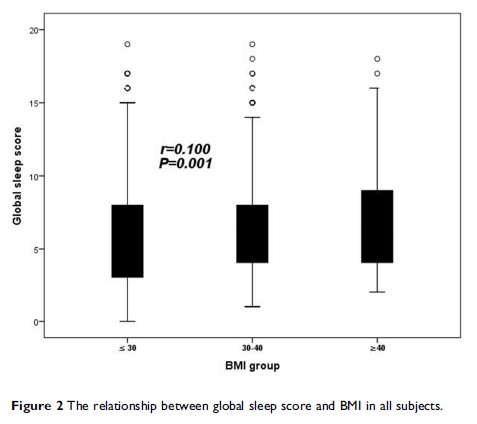
Results: Univariate analysis showed that a higher global sleep score was correlated with lower age (r = −0.079, P= 0.009), higher BMI (r = 0.100, P= 0.001) and heavier perceived stress (r = 0.335, P<0.001). Multivariate linear regression analysis showed that the global sleep score was positively related to levels of IL-6 (Sβ=0.074, P=0.009), IL-8 (Sβ=0.089, P=0.002), TNF-ɑ (Sβ=0.0.082, P=0.005), E-selectin (Sβ=0.071, P=0.016) and intercellular adhesion molecule-1 (ICAM-1, Sβ=0.117, P<0.001) after adjustments were made for age, gender, race, marital status, education, current smoking status, physician-diagnosed CVDs and respiratory diseases, BMI and perceived stress. However, the global sleep score was not associated with serum IL-10 (Sβ=−0.021, P=0.463) and CRP (Sβ=0.035, P=0.059) levels after adjustments were made for these confounding factors.
Conclusion: Poor sleep is positively associated with serum inflammatory marker levels among obese adults. Sufficient sleep may be particularly important for obese adults to prevent CVDs.
Keywords: global sleep score, inflammation, body mass index, perceived stress, obese adults