119942
论文已发表
注册即可获取德孚的最新动态
IF 收录期刊
- 3.6 Breast Cancer (Dove Med Press)
- 4.3 Clin Epidemiol
- 2.6 Cancer Manag Res
- 3.2 Infect Drug Resist
- 4.1 Clin Interv Aging
- 6.1 Drug Des Dev Ther
- 4.1 Int J Chronic Obstr
- 8.7 Int J Nanomed
- 2.5 Int J Women's Health
- 3.2 Neuropsych Dis Treat
- 2.4 OncoTargets Ther
- 2.6 Patient Prefer Adher
- 2.6 Ther Clin Risk Manag
- 3.1 J Pain Res
- 3.5 Diabet Metab Synd Ob
- 4.5 Psychol Res Behav Ma
- 3.4 Nat Sci Sleep
- 2.4 Pharmgenomics Pers Med
- 2.6 Risk Manag Healthc Policy
- 4.6 J Inflamm Res
- 2.3 Int J Gen Med
- 3.9 J Hepatocell Carcinoma
- 3.3 J Asthma Allergy
- 2.5 Clin Cosmet Investig Dermatol
- 3.0 J Multidiscip Healthc

银莲花的三萜皂苷通过调节 MAPK,PD1/PDL1 和 STAT3 信号通路并改变癌症代谢来抑制肿瘤细胞增殖
Authors Han L, Yao S, Cao S, Mo G, Li J, Cao Y, Huang F
Received 17 April 2019
Accepted for publication 26 November 2019
Published 12 December 2019 Volume 2019:12 Pages 10917—10930
DOI https://doi.org/10.2147/OTT.S212666
Checked for plagiarism Yes
Review by Single-blind
Peer reviewer comments 2
Editor who approved publication: Professor Jianmin Xu
Purpose: Natural triterpenoid saponins isolated from Anemone flaccida Fr. Schmidt have exhibited anti-cancer properties and exerted remarkable inhibitory effects on tumor growth. Herein, we investigated the potential mechanism involved in the suppression of hepatocellular carcinoma (HCC) development by triterpenoid saponins in a mouse model.
Methods: An HCC model was established in H22 tumor-bearing mice and triterpenoid saponins were administered at various doses. Immunofluorescence, flow cytometry, and western blot were performed to analyze the effect of triterpenoid saponins on immune response in tumor tissues. Metabolomic analysis was carried out to assess the metabolites involved in mediating the effect of triterpenoid saponins on tumor tissues.
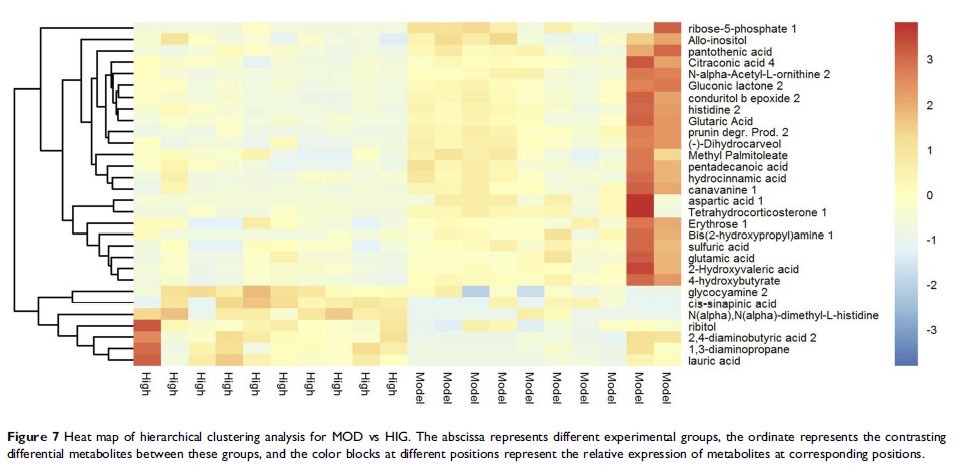
Results: Triterpenoid saponins induced anti-tumor immune response by decreasing the number of Treg cells, increasing that of B cells, natural killer cells, and CD3+/CD28+ T cells, and reducing the secretion of inflammatory factors including nuclear factor-κB, cyclooxygenase-2, and microsomal prostaglandin E synthase-1. In addition, triterpenoid saponins inhibited tumor growth and induced the apoptosis of HCC cells by blocking the activation of PD1/PD-L1, ERK1/2, p38 MAPK, JNK, and STAT3 signaling pathways. Furthermore, triterpenoid saponins regulated tumor immune response by upregulating a number of metabolites (including 1,3-diaminopropane, lauric acid, 2,4-diaminobutyric acid 2, and ribitol) and modulating the metabolism of histidine, arginine, proline, beta-alanine, glycine, serine, and threonine.
Conclusion: The findings suggested that triterpenoid saponins interfered with multiple signaling cascades involved in tumorigenesis and tumor metabolism and have potential applications in HCC therapy.
Keywords: triterpenoid saponins, hepatocellular carcinoma, immune response, MAPK, PD1/PD-L1, STAT3