119661
论文已发表
注册即可获取德孚的最新动态
IF 收录期刊
- 3.6 Breast Cancer (Dove Med Press)
- 4.3 Clin Epidemiol
- 2.6 Cancer Manag Res
- 3.2 Infect Drug Resist
- 4.1 Clin Interv Aging
- 6.1 Drug Des Dev Ther
- 4.1 Int J Chronic Obstr
- 8.7 Int J Nanomed
- 2.5 Int J Women's Health
- 3.2 Neuropsych Dis Treat
- 2.4 OncoTargets Ther
- 2.6 Patient Prefer Adher
- 2.6 Ther Clin Risk Manag
- 3.1 J Pain Res
- 3.5 Diabet Metab Synd Ob
- 4.5 Psychol Res Behav Ma
- 3.4 Nat Sci Sleep
- 2.4 Pharmgenomics Pers Med
- 2.6 Risk Manag Healthc Policy
- 4.6 J Inflamm Res
- 2.3 Int J Gen Med
- 3.9 J Hepatocell Carcinoma
- 3.3 J Asthma Allergy
- 2.5 Clin Cosmet Investig Dermatol
- 3.0 J Multidiscip Healthc

宫颈癌的直肠系膜淋巴结转移患者的特征和生存率
Authors Wang W, Liu X, Zhang F, Hu K
Received 9 August 2019
Accepted for publication 27 November 2019
Published 11 December 2019 Volume 2019:11 Pages 10401—10408
DOI https://doi.org/10.2147/CMAR.S226594
Checked for plagiarism Yes
Review by Single-blind
Peer reviewer comments 2
Editor who approved publication: Professor Rudolph Navari
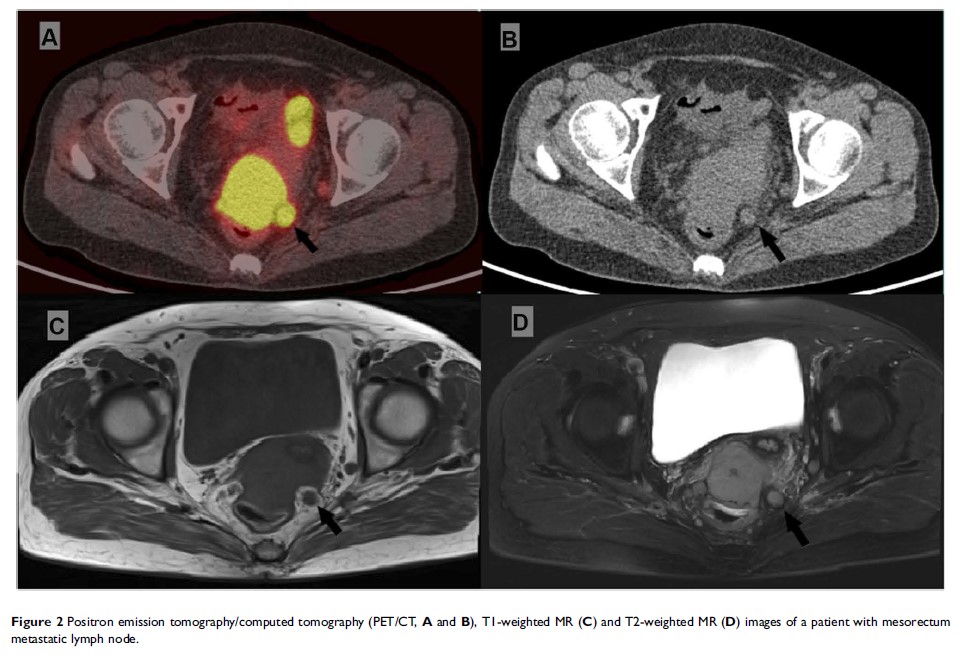
Purpose: To analyze the characteristics and survival of patients with mesorectum metastatic lymph nodes (MLNs) from cervical cancer.
Patients and methods: We retrospectively reviewed 1194 consecutive patients with FIGO stage IA–IVA cervical cancer who were treated with definitive radiotherapy between January 2011 and December 2015 in our institute. Patients were treated with intensity-modulated radiation therapy (IMRT) and brachytherapy, combined with concurrent chemotherapy. Mesorectum, pelvic and para-aortic MLNs were boosted 59–61Gy with IMRT. We calculated the clinical characteristics and survival of the patients with and without mesorectum MLNs and made comparisons between them.
Results: The incidence rate of mesorectum MLNs was 0.8% (10/1194). The incidence rates for patients with FIGO stages I, II, III, and IVA disease were 0%, 0.4%, 2.0%, and 33.3%, respectively. Mesorectum MLNs were associated with more advanced stage (p <0.001); larger tumor size (p = 0.002), para-aortic MLNs (p <0.001), common iliac MLNs (p <0.001), and bilateral pelvic MLNs (p <0.001). All patients with mesorectum MLNs experienced treatment failure and died during follow-up. The median overall survival was 10.43 months. The 2-year overall survival (OS), disease-free survival (DFS), and local control (LC) rates were 10%, 0%, and 30%, respectively. Multivariate analysis showed that that mesorectum MLNs (hazard ratio, HR 4.0, 95% CI 1.8–9.1, p=0.001), para-aortic MLNs (HR 1.8, 95% CI 1.1–2.8, p=0.017) and pelvic MLNs (HR 2.5, 95% CI 1.7–3.7, p<0.001) were independent prognostic factors of OS.
Conclusion: Mesorectum MLNs from cervical cancer are rare. And, the survival of patients with mesorectum MLNs was poor after dose-escalated concurrent chemoradiotherapy.
Keywords: uterine cervical neoplasms, mesorectum lymph nodes, radiotherapy