119661
论文已发表
注册即可获取德孚的最新动态
IF 收录期刊
- 3.6 Breast Cancer (Dove Med Press)
- 4.3 Clin Epidemiol
- 2.6 Cancer Manag Res
- 3.2 Infect Drug Resist
- 4.1 Clin Interv Aging
- 6.1 Drug Des Dev Ther
- 4.1 Int J Chronic Obstr
- 8.7 Int J Nanomed
- 2.5 Int J Women's Health
- 3.2 Neuropsych Dis Treat
- 2.4 OncoTargets Ther
- 2.6 Patient Prefer Adher
- 2.6 Ther Clin Risk Manag
- 3.1 J Pain Res
- 3.5 Diabet Metab Synd Ob
- 4.5 Psychol Res Behav Ma
- 3.4 Nat Sci Sleep
- 2.4 Pharmgenomics Pers Med
- 2.6 Risk Manag Healthc Policy
- 4.6 J Inflamm Res
- 2.3 Int J Gen Med
- 3.9 J Hepatocell Carcinoma
- 3.3 J Asthma Allergy
- 2.5 Clin Cosmet Investig Dermatol
- 3.0 J Multidiscip Healthc

为什么大多数限制性饮食者的减肥会失败?:来自功能磁共振成像研究的证据
Authors Su Y, Bi T, Gong G, Jiang Q, Chen H
Received 23 August 2019
Accepted for publication 3 December 2019
Published 19 December 2019 Volume 2019:12 Pages 1127—1136
DOI https://doi.org/10.2147/PRBM.S228430
Checked for plagiarism Yes
Review by Single-blind
Peer reviewer comments 2
Editor who approved publication: Professor Igor Elman
Background: Restraint dieting is a key step in the avoidance of obesity and other eating problems, but why some restraint eaters (REs) succeed and some fail in dieting is unknown. The difference between successful REs (S-REs) and unsuccessful REs (US-REs) is still unknown. This is the first study to compare the fMRI reactivity among US-REs, S-REs and unrestrained eaters (UREs) in a food-related Go/NoGo paradigm.
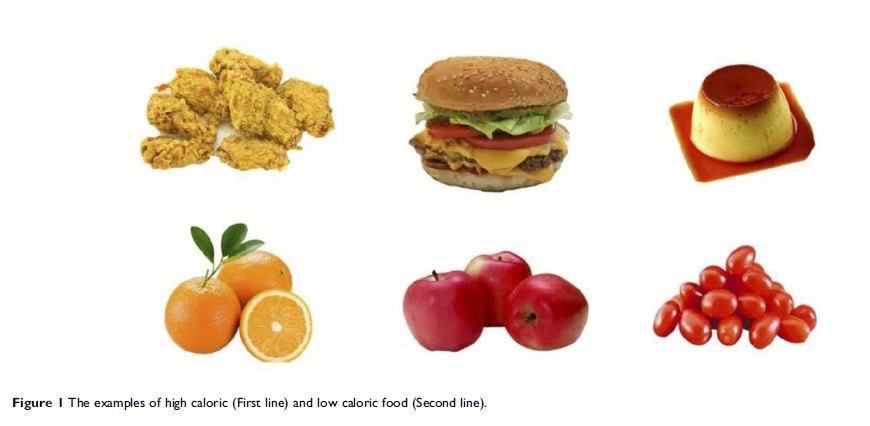
Methods: Functional magnetic resonance imaging (fMRI) was used to examine the neural responses corresponding to the success of dieting in REs. Eighteen S-REs, 17 US-REs and 17 UREs were asked to perform a Go/No-Go task after being shown pictures of either high-caloric or low-caloric food.
Results: fMRI results revealed stronger activations for high-caloric food in areas associated with executive function and inhibition (i.e., middle frontal gyrus and cerebellum) among S-REs than among US-REs. In contrast, both US-REs and UREs showed stronger activations for low-caloric food in reward areas (i.e., orbitofrontal cortex (OFC)) than S-REs.
Conclusion: Our results provide evidence that food temptations may trigger processes of successful inhibition control in S-REs, whereas US-REs may fail in resisting the attraction to high-caloric food, thereby showing a high probability of overeating.
Keywords: successful and unsuccessful restrained eaters, measurement of restrained eating, inhibition control, fMRI